
Understanding line marking paint for UK sports halls
When you specify sports hall line marking paint, you are choosing part of a complete playing surface rather than an isolated decoration. The lines must remain visible while working with the floor’s grip, shock absorption, ball response and cleaning regime. They also need to suit the activities sharing the hall, from badminton and netball to basketball, five-a-side football and school PE. For a useful overview of paint categories and applications, you can also read this sports court paint guide, while treating the product information as a starting point for your own floor assessment.
What makes indoor court markings different from road markings
Indoor court lines operate in a controlled but heavily used environment. They are exposed to trainers, wheeled equipment, dragging goal frames, repeated mopping and frequent changes between sports, rather than rain, frost and vehicle tyres. That means a paint designed for external highways or industrial yards may not provide the right friction, sheen or adhesion for a sports floor.
You also need to consider how the marking sits within the playing surface. A line that is too glossy, too thick or poorly bonded can affect foot placement and cleaning. Indoor markings should therefore be assessed as part of the performance of the complete floor, with attention to the existing finish and the manufacturer’s application instructions.
Common sports hall surfaces, including timber and synthetic floors
A UK sports hall may contain sprung timber, solid hardwood, polyurethane, vinyl, rubber or another synthetic system. Timber floors can have a factory or site-applied coating, while synthetic surfaces may be sheet materials, poured systems or textured finishes. The same paint cannot automatically be expected to behave identically on all of them.
The floor’s age and condition matter too. Fine dust, worn finish, wax residues, moisture, old incompatible lines and local repairs can all reduce adhesion. Before you compare solvent and water-based options, identify the substrate, the coating already present and the way the hall is used.
How paint formulation affects adhesion and wear
Solvent-based and water-based paints use different carriers and can dry or cure in different ways. The carrier affects how the coating flows, how it wets the surface and how quickly the film develops enough strength for cleaning and play. Pigment concentration, resin type, line thickness and the quality of preparation also influence the final result.
Durability is consequently a system question. A technically hard paint may still fail early if it is applied over contamination, an unsuitable finish or a damp surface. Conversely, a water-based product applied to a compatible, well-prepared floor may perform very well in a moderately used hall.
The role of colour, contrast and line visibility
Clear lines help players, coaches, teachers and officials read a shared court without hesitation. You should select colours that contrast with the floor and with other sports markings, while avoiding an unnecessarily busy layout. Glare from lighting and the floor’s gloss can make a colour appear less distinct from certain viewing angles.
Line width and edge sharpness are just as important as colour. A neat, even edge supports quick visual recognition; feathering or overlapping paint makes several courts harder to distinguish. If your hall needs new overlays, a planned layout review can prevent avoidable conflicts between sports.
Solvent-based paint for sports court markings
Solvent-based paint has traditionally been considered where markings need a tough film and the hall experiences demanding use. Its performance depends on the resin, solvent blend, substrate and curing conditions, so the term alone does not guarantee a particular service life. You should assess the product data alongside the floor manufacturer’s requirements and the venue’s ventilation arrangements.
For facilities managers, the main trade-off is practical: a potentially hard-wearing finish may come with stronger odour and more demanding controls during application. That can affect access, neighbouring rooms and the length of a closure. Complete Sports Flooring provides sports flooring installation and line marking, where the marking specification can be considered alongside the wider floor system rather than treated as a separate purchase.

How solvent-based formulations cure and bond
In a solvent-based formulation, the carrier evaporates while the resin forms the coating film. The paint needs a clean, suitably keyed and sufficiently dry surface so it can wet and bond to the existing finish. Temperature, air movement, humidity and film thickness all influence how quickly the marking reaches a usable condition.
The word “cure” should not be treated as interchangeable with “touch dry”. A line can feel dry at the surface while remaining softer below, particularly if it has been applied too heavily or ventilation is poor. Following the product’s stated recoat and cure times helps prevent early scuffing, print-through or cleaning damage.
Advantages for hard-wearing court lines
A suitable solvent-based system may tolerate repeated foot traffic and routine abrasion well, particularly when the surface has been prepared properly. It can be useful in halls where court markings receive frequent use from trainers, sports equipment and regular cleaning. Its resistance should still be judged against the actual coating and the conditions of the venue, not assumed from the formulation category.
You should also consider the appearance over time. A line that remains firmly attached but becomes polished, dirty or visually weak may still need attention. The best outcome combines adhesion, suitable friction, clean edges and a maintenance approach that does not gradually damage the film.
Potential odour, ventilation and indoor air quality concerns
Solvent vapour can be noticeable during application and while the coating dries. In a sports hall with limited natural ventilation, you may need mechanical extraction, controlled access and a clear plan for adjacent occupied areas. Staff, contractors and other building users should not be exposed simply because the hall is temporarily closed.
Plan the work during a period when doors, windows and ventilation systems can be managed safely. Keep people away from the application area until the responsible contractor confirms that the product has dried and the space is suitable for reoccupation. A short closure planned well is preferable to reopening too soon and damaging the new lines.
Cleaning, preparation and application requirements
Preparation often decides whether the line marking lasts. The surface should be cleaned using a method compatible with the floor, allowed to dry fully and checked for residues, loose coating and damaged areas. Masking must be secure, and the paint should be mixed and applied exactly as the technical data requires.
A sensible preparation sequence usually includes the following checks:
- Confirm the floor type and identify the existing finish.
- Remove dust, grease, polish residue and loose material without harming the surface.
- Repair or isolate damaged areas before setting out the new lines.
- Confirm ventilation, access controls and the planned curing window.
This sequence does not replace the product instructions, but it helps you avoid treating line marking as a quick cosmetic job. If the existing finish is failing, repainting over it may only hide the underlying problem for a short time.
Water-based paint for sports court markings
Water-based paint is often considered for indoor environments where lower odour and straightforward clean-up are priorities. It can be a practical choice for schools, clubs and leisure centres, provided the product is compatible with the floor and the hall can remain undisturbed while it dries. The formulation still needs to be assessed on its technical merits rather than selected solely because it sounds more convenient.
In a busy venue, the reopening timetable can be as influential as the paint’s eventual wear resistance. You need enough time for preparation, application, drying and any required curing before the first lesson or booking. A well-planned water-based system can support that process, but poor humidity control or early traffic can compromise the finish.
How water-based formulations perform on indoor floors
Water-based formulations disperse or carry their resin in water, which then needs to evaporate as the coating develops. On a suitable indoor floor, the paint can provide clean, clearly defined markings when applied at the recommended thickness. Adhesion remains dependent on the substrate, previous coating, cleanliness and moisture level.
The floor should not be judged only by how the paint looks immediately after application. Check whether the film has developed enough hardness for the expected cleaning and sports activity. A staged handover, with the contractor confirming the permitted use, can reduce the risk of marking the surface before it is ready.
Lower odour and easier clean-up benefits
Compared with many solvent-containing alternatives, water-based paint can make the application period more comfortable for people working near the hall. Tools and small spills may also be easier to clean while the material is still wet, although you should follow the product’s safety information and avoid washing residues into unsuitable drains.
Lower odour does not mean that you can ignore ventilation or access controls. The paint may still contain substances requiring sensible precautions, and the hall may need airflow to support drying. You should communicate the work plan to caretakers, cleaners and anyone responsible for reopening the space.
Drying time, humidity and temperature considerations
Water evaporation is affected by temperature, humidity and air movement. A cool, damp hall can take considerably longer to dry than a warm, well-ventilated one. If the building is closed over a school holiday, check that heating and ventilation settings will support the planned programme rather than assuming the calendar alone provides enough time.
Avoid creating a strong draught that disturbs wet paint or introduces dust. Instead, use controlled airflow and follow the manufacturer’s stated conditions. The line should be inspected after drying, with particular attention to edges, adhesion and any areas where the coating appears uneven.
Situations where water-based paint may wear sooner
Water-based paint may wear sooner when it is applied over a poorly prepared or incompatible finish, exposed to unusually heavy abrasion or reopened before it has cured sufficiently. Aggressive cleaning products and abrasive pads can shorten its useful life as well. These issues are not unique to water-based products, but they can become more visible when the film has not reached its intended hardness.
You should therefore compare the expected use with the product’s documented performance. A lightly used school hall, a heavily booked leisure centre and a competition venue may need different specifications. Where the use is particularly intense, obtain written technical advice and test the proposed system before committing to the whole floor.
Comparing durability on UK courts
Line marking durability is best understood through the conditions the floor must withstand. Foot traffic, sports equipment, cleaning chemicals, abrasion and seasonal changes in building conditions all contribute to wear. The relevant question is not simply whether solvent-based or water-based paint is “stronger”, but which complete system is most reliable for your venue.
You should record how often the hall is used, which sports take place, what cleaning equipment is used and how quickly repairs can be scheduled. A simple maintenance history can reveal whether fading, edge loss, scuffing or loss of contrast is the main problem. That evidence makes the specification more defensible and helps you budget for future closures.
Resistance to foot traffic, sports equipment and cleaning
Trainers create repeated low-level abrasion across the busiest routes, while portable goals, benches and dividers may create more concentrated scuffs. Cleaning adds another form of stress, especially where machines pass repeatedly over the same court boundaries. The paint must remain bonded without creating a raised or slippery edge.
The table below provides a practical comparison framework. It is not a promise of service life, because the result depends on the specified product, application and venue conditions.
| Consideration | Solvent-based option | Water-based option | What you should check |
|---|---|---|---|
| Odour during application | Often more noticeable | Generally lower | Ventilation and access plan |
| Clean-up of wet tools | Follow solvent-specific instructions | Often simpler with water-compatible tools | Product safety data |
| Abrasion tolerance | May suit demanding use when compatible | Can perform well on suitable floors | Resin, thickness and test area |
| Drying conditions | Needs controlled evaporation | Sensitive to temperature and humidity | Manufacturer’s application limits |
| Reopening programme | Allow full cure, not only surface dryness | Allow drying and full stated cure | Written handover guidance |
The comparison helps you ask better questions of the contractor and manufacturer. It also shows why a lower-odour choice is not automatically the best choice, or why a solvent-based choice is not automatically the most durable.
Impact of abrasion, scuffing and repeated maintenance
Abrasion gradually thins the line, while scuffing can roughen or transfer material at the edge. Repeated maintenance may remove dirt effectively but can also dull the finish if the pad, chemical or pressure is unsuitable. The busiest markings may therefore need local attention before less-used lines elsewhere in the hall.
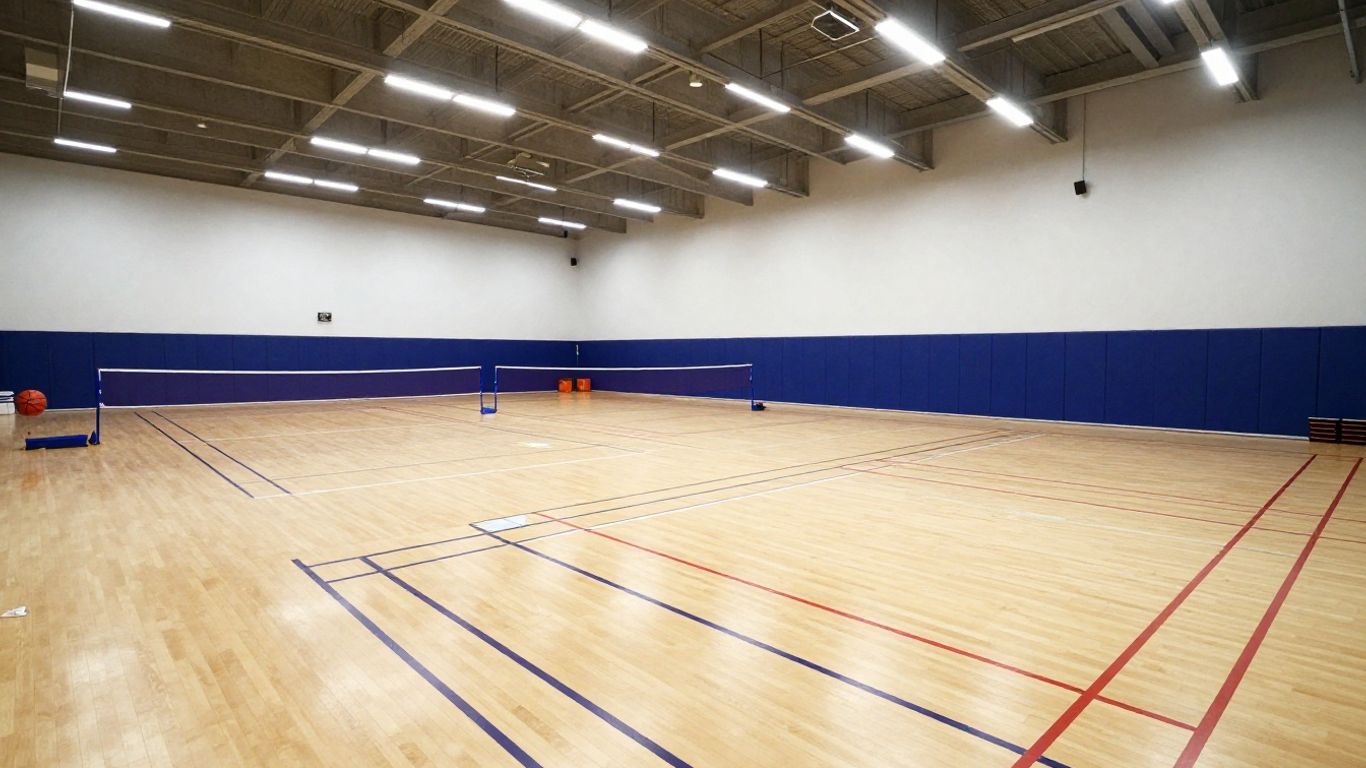
Inspect the surface under normal lighting and from the positions where players and officials view it. Look for loss of contrast, flaking, feathered edges and areas where cleaning has changed the sheen. Early intervention can sometimes be limited to repairs rather than a complete relining, but the cause must be understood first.
Expected service life in schools, clubs and leisure centres
There is no universal service-life figure for indoor court paint. A primary school hall used for a few scheduled sessions each week faces a different load from a leisure centre with daily bookings, movable equipment and several cleaning cycles. Existing floor coatings, lighting, moisture and the quality of the original application also influence when lines need renewal.
Treat any estimate as a planning assumption rather than a guarantee. Keeping dated photographs and maintenance notes gives you a more useful local record. It can also help you coordinate line renewal with sanding, refinishing or other planned work instead of creating an unexpected closure.
How usage levels influence the best paint choice
Your usage profile should guide the balance between wear resistance, odour, cure time and cost. Consider peak traffic zones, the number of sports overlays, whether equipment is moved across lines and how often the floor is cleaned. Ask whether the product has been tested on the same type of finish and whether a small trial can remain in place long enough to assess it.
A sports flooring specialist can help you connect those observations to the wider system. For example, sports floor refurbishment guidance may be relevant if worn markings are symptoms of a tired coating rather than a paint-only issue. The right decision may involve refinishing first, then applying new lines to a stable surface.
Choosing the right paint for the floor surface
The floor surface should lead the specification. A paint that performs well on one coating may fail to bond to another, and a marking product suitable for an unsealed substrate may be inappropriate over a finished sprung floor. You should establish what is already there before choosing the carrier, colour or application method.
Ask for the floor type, coating history and maintenance products used by the venue to be recorded in the project documents. If records are missing, a site inspection and small trial are safer than relying on appearance alone. Complete Sports Flooring works with hardwood, polyurethane, rubber and vinyl sports flooring systems, so the line marking discussion can sit within a broader sports floor surface assessment.
Selecting paint for sprung timber sports floors
Sprung timber floors need care because the playing surface and its finish form part of a performance system. You should avoid filling the texture or creating a film that changes the intended friction or response. The timber must be clean, stable and suitably finished before the lines are measured and applied.
Check whether the floor is due for sanding or refinishing. Applying new markings over a worn or contaminated finish can produce a short-lived improvement and make later refurbishment more complicated. Where the hall serves several sports, coordinate the colour plan with the playing layout before work begins.
Options for polyurethane, vinyl and synthetic surfaces
Polyurethane, vinyl and other synthetic surfaces differ in texture, flexibility, porosity and chemical resistance. A smooth sealed surface may need careful keying or a compatible primer, while a textured synthetic floor can make crisp masking more difficult. The proposed paint should be approved for the exact substrate and finish, not just for “sports floors” in general.
You should also consider how the floor moves under load and how the marking will age beside it. A rigid or overly thick line can behave differently from the surrounding surface. Technical advice is particularly useful where a venue combines older painted areas with newer synthetic repairs.
Checking compatibility with existing finishes and coatings
Before application, identify the previous paint, polyurethane, polish, sealant or repair material if possible. Incompatible layers can soften, wrinkle, delaminate or prevent the new line from bonding. Cleaning alone will not correct a fundamentally unsuitable coating combination.
Request the technical data sheet and safety data sheet for the proposed product, then compare its preparation and overcoating requirements with the floor manufacturer’s guidance. If the information is unclear, pause the specification rather than allowing a contractor to make an assumption on site.
Why manufacturer testing and small trial areas matter
A trial area gives you a chance to check adhesion, colour, edge definition, sheen and cleaning response on the actual floor. It is especially valuable where the surface has been repaired, previously relined or maintained with products whose composition is uncertain. The trial should be documented and left long enough to provide meaningful feedback, not judged only while the paint is freshly applied.
Use the result to agree the application method, line thickness and reopening period. A small test cannot reproduce every future load, but it can expose obvious incompatibility before the entire hall is committed. That modest step often protects both the floor and the operational timetable.
Applying sports hall line marking paint correctly
Even the most suitable paint will underperform if the application is rushed. Accurate line marking requires a clean substrate, careful setting out, controlled paint application and enough time for the coating to cure. You also need a clear plan for moving materials and equipment without crossing wet areas.
For schools and leisure centres, the programme should account for term dates, bookings, access restrictions and the time needed to ventilate the building. A written method statement can make responsibilities clear, from preparation and masking through to inspection and handover. It also gives you a record of the assumptions behind the reopening date.
Preparing and cleaning the court surface
Start with an inspection rather than immediately washing or sanding. Dust, wax, polish, grease and loose coating should be removed using methods that will not damage the floor. Moisture and cleaning residues must be allowed to clear before masking, because trapped contamination can cause lifting or blurred edges.
Repairs should be completed before the lines are set out. If the surface has widespread wear, investigate whether refinishing is more appropriate than isolated preparation. The cleanest-looking line cannot compensate for a failing base coat.
Measuring, masking and setting out accurate lines
Set out the court from reliable dimensions and fixed reference points, checking the relationship between all sports overlays. Measure twice before applying tape, and keep the layout drawings with the project records. Small errors become conspicuous where several parallel lines meet or where a court sits close to a wall or piece of fixed equipment.
Use masking tape suited to the floor and paint system, pressing the edges down firmly without leaving adhesive residue. Remove it at the correct stage for the chosen product. Good setting out protects visibility and reduces the temptation to correct an error with extra paint.
Controlling paint thickness and avoiding blurred edges
Paint should be applied evenly, with no heavy build-up at corners or tape edges. Excessive thickness can extend drying and curing, while too little coverage may produce weak colour and early loss of contrast. The application tool, pressure and operator’s pace all affect the line profile.
Keep the wet edge controlled and avoid disturbing partially dried sections. If a line bleeds beneath the tape, do not simply add another coat over the problem without finding its cause. Correct masking, suitable viscosity and a clean substrate usually matter more than trying to hide an untidy edge afterwards.
Curing times before reopening the sports hall
Reopening should be based on the product’s stated drying and curing requirements, the conditions in the hall and the contractor’s inspection. Touch-dry paint may still be vulnerable to trainers, equipment wheels and damp cleaning. Keep the area closed for the full recommended period, even when the programme is under pressure.
Before handover, check the lines in normal lighting, confirm that the floor is clean and ensure the caretaker understands the first-clean instructions. The reopening date should be agreed with evidence, not selected simply because the next booking is already in the diary.
UK safety, compliance and maintenance considerations
A sports hall line marking project has to protect users as well as appearance. Slip resistance, surface friction, ventilation, chemical handling and accurate court dimensions all matter to a safe facility. You should also consider the expectations of relevant sports bodies and the requirements of the complete floor system rather than treating paint in isolation.
For a new or refurbished sports floor, EN 14904 considerations may extend beyond the visible lines to shock absorption, vertical deformation, friction and ball behaviour. A specialist assessment can help you understand whether relining, refinishing or wider remedial work is needed. Complete Sports Flooring focuses on EN 14904 sports flooring compliance alongside installation, refurbishment and line marking for sports facilities.
Meeting slip resistance and sports governing body expectations
The marking must not create a localised slip hazard or an unexpected change in friction. You should check the specified finish against the playing requirements and any relevant governing body guidance for the sports hosted in the hall. Competition venues may have more exacting requirements for dimensions, colours and line visibility than a general-purpose school hall.
Do not assume that a visually sharp line is automatically compliant. Dimensions, surface performance and the interaction between the marking and the surrounding coating should be considered together. Where certification or testing is required, retain the relevant records for future inspections.
Managing fumes, ventilation and access during application
Before work starts, define the exclusion zone and identify how fresh air will move through the building. Keep pupils, members, cleaners and other contractors away from wet paint and stored materials. Solvent-based products may require particularly careful control of ignition sources and vapour exposure, while water-based products still need sensible ventilation and handling.
Display temporary notices where appropriate and nominate one person to control access. Coordinate with the building manager so air-handling systems are operated as intended. These steps are simple, but they prevent an otherwise well-executed relining project from creating an avoidable safety issue.
Using COSHH information and product safety data
The Control of Substances Hazardous to Health framework requires you to understand and control risks from hazardous products used at work. Read the product safety data and COSHH assessment before the paint arrives, including information on storage, personal protective equipment, spill response, first aid and disposal.
Make sure the people carrying out the work know the controls and have access to the current documents. Do not rely on a product label alone where the technical or safety information provides more detailed instructions. Record any site-specific measures, such as restricted ventilation zones or additional protective equipment.
Maintaining markings with suitable cleaning methods
Routine cleaning should remove dirt without gradually abrading the paint or softening the finish. Use the approved detergent, dilution, pad and machine setting for the floor system. Avoid introducing a harsher chemical simply because a line looks dull; the wrong method can accelerate the problem.
Keep a maintenance log that records cleaning products, incidents, repairs and visible changes. If a marking begins to fail, photograph it and note whether the damage is concentrated in a traffic route, under equipment or near a doorway. That information can guide a targeted repair and improve the next specification.
When to repaint, repair or remove old court lines
Repaint when visibility has fallen below the level needed for safe and confident use, or when adhesion failure is spreading. Repair may be appropriate for isolated chips, scuffs or small areas of damage, provided the surrounding coating is sound. Removal and full preparation may be necessary where old layers are numerous, incompatible or lifting.
Plan the decision around the whole floor’s condition. If sanding, refinishing or plank replacement is already due, applying fresh lines beforehand may waste time and money. A coordinated programme can reduce repeated closures and leave you with a more consistent surface across the hall.
Conclusion
For UK sports halls, solvent-based and water-based line marking paints can both be appropriate when matched to the floor, use and application conditions. You will get the most durable result by checking compatibility, preparing thoroughly, controlling ventilation and cure times, and maintaining the markings with the correct cleaning regime. The paint choice matters, but the quality of the complete specification and installation matters just as much.
—Quick answers
Frequently asked questions
No. Durability depends on the resin and product specification, surface preparation, compatibility, application thickness, curing conditions and the amount of traffic and cleaning. A suitable water-based system can outperform an unsuitable solvent-based one.
It may be suitable where lower odour and easier clean-up are useful, particularly during planned school closures. You still need to check the exact product, floor compatibility, ventilation and curing time before reopening the hall.
Sometimes, but only after checking the condition and compatibility of the existing coating. Old lines may need removal or preparation if they are loose, excessively built up, contaminated or made from an incompatible material.
The closure should last for the product’s full stated drying and curing period, adjusted for temperature, humidity, ventilation and application thickness. Touch-dry is not necessarily ready for sports use or machine cleaning.
Sprung timber, hardwood, polyurethane, vinyl, rubber and other synthetic floors can all require different preparation and coating approaches. Advice is particularly important where the existing finish is unknown or the surface has been repaired.
Use accurate setting out, firm masking, an even paint film and a clean, dry substrate. Remove masking at the correct stage and avoid applying excessive paint, which can prolong drying and encourage bleeding at the edges.
There is no fixed interval for every venue. Inspect the lines regularly and consider visibility, adhesion, scuffing, cleaning damage and changes in use. Renewal can often be coordinated with planned floor maintenance to reduce disruption.