
1. Choosing flooring that supports multiple sports and activities
A Southwark community centre may host basketball in the morning, badminton after school and fitness, dance or community events later in the day. That range makes flooring selection more involved than choosing a surface for one dedicated sport. You need to understand how users move, stop, turn, jump and handle equipment across the full weekly programme.
The surface should be assessed for shock absorption, surface friction, ball response and compatibility with the sports markings you need. A floor that feels suitable for one activity may be less comfortable or predictable for another, particularly when the hall is shared by children, older users and competitive players. Speaking with a specialist early can help you create a performance brief rather than relying on a generic specification.
For a Southwark project, Complete Sports Flooring offers sports hall flooring solutions covering installation, refurbishment and line marking, with attention to EN14904 compliance. A useful first step is to map each activity against the performance requirements it places on the floor:
| Activity | Key flooring consideration | Operational question |
|---|---|---|
| Basketball | Ball response, traction and area elasticity | Will markings and rebound remain consistent? |
| Badminton | Controlled friction and low glare | Can players move confidently without excessive sticking? |
| Dance and fitness | Comfort, resilience and shock absorption | Will the surface remain comfortable during repeated sessions? |
| Community events | Protection and flexible use | How will the floor be protected when furniture is introduced? |
This exercise gives you a clearer basis for comparing systems and line-marking layouts. It also helps prevent a common mistake: specifying around the most visible activity while overlooking the quieter, more frequent uses that may create greater long-term wear.
2. Managing heavy use, wear and maintenance demands
Busy community centres rarely have the luxury of long closures for repairs. Floors are opened, cleaned and used repeatedly, often with equipment moved across them between sessions. Before you approve a system, consider the cleaning capacity of your team, the quality of entrance matting and the way chairs, goals and other equipment will be stored and handled.
Wear is not only a cosmetic issue. Dull areas, damaged finishes, open joints or inconsistent markings can affect confidence and performance, while small defects may become trip hazards if they are ignored. A planned inspection routine should record changes in the surface, moisture concerns, impact damage and areas receiving unusually heavy traffic. Planned maintenance protects performance and makes expenditure easier to forecast.
When replacement is not yet necessary, Complete Sports Flooring provides sanding, refinishing and refurbishment services for sports halls in Southwark, including EN14904-compliant upgrades. A practical maintenance plan normally includes:
- Daily removal of grit and debris from the playing area.
- Prompt cleaning of spills before they affect traction or the finish.
- Regular checks of joints, transitions, line markings and equipment damage.
- Scheduled professional inspections and refurbishment based on condition.
These actions work best when they are assigned to named staff and fitted around the centre’s booking calendar. Refurbishment can also be easier to schedule during school holidays or planned closures, reducing the chance that a small defect becomes a disruptive emergency.
3. Preventing slips, trips and sports-related injuries
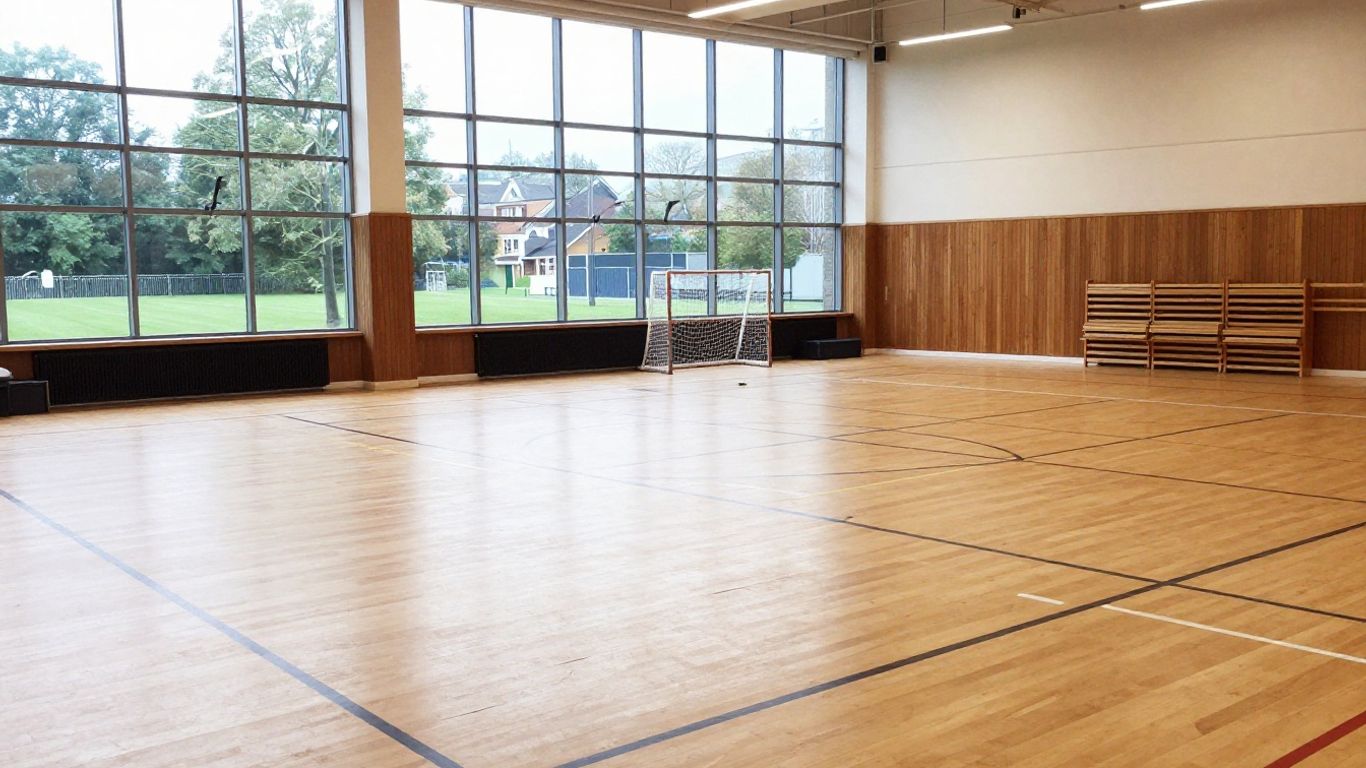
Safety begins with the interaction between footwear, movement and the floor surface. Excessive dust, unsuitable cleaning products, worn finishes and localised contamination can all alter friction. You should also consider transitions at entrances, storage areas and thresholds, where a change in level or material can create a separate trip risk.
A compliant specification does not remove the need for good housekeeping. Staff need clear procedures for dealing with spills, bringing equipment into the hall and reporting damage. Users should be able to see court lines without a confusing tangle of colours, and any floor protection used for non-sporting events should be stable, compatible and removed without leaving residue.
Shock absorption matters as well as grip. A suitable sports floor can help manage the repeated impact associated with running and jumping, but its performance depends on the complete system, the subfloor and the installation quality. Site assessment should therefore cover moisture, levels, joints, drainage and access before work begins, not just the visible playing surface.
4. Controlling noise and vibration in busy community centres
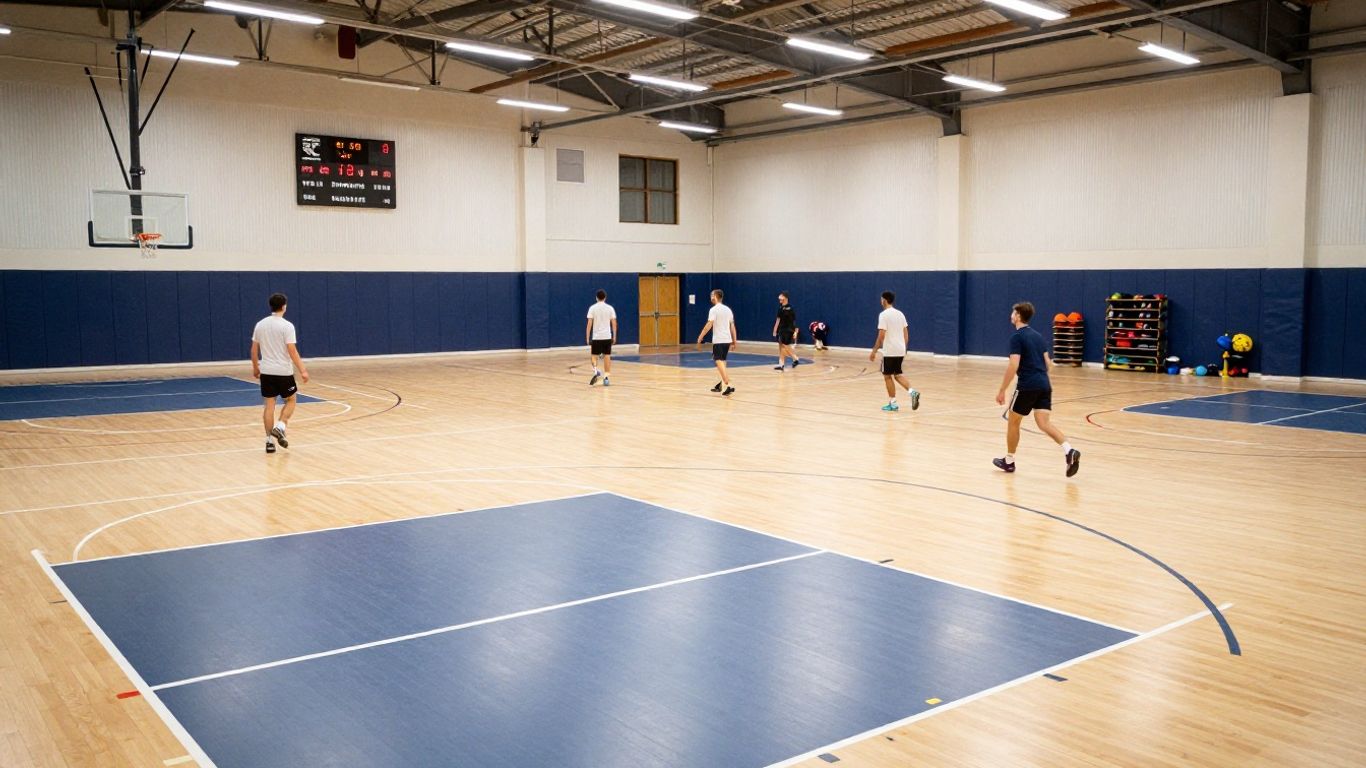
Noise can affect far more than the people on court. Ball impact, footfall, fitness equipment and movable seating may be heard in studios, offices or neighbouring rooms, making the centre harder to share. In a densely used building, vibration can also travel through the structure and become a concern for staff, residents or other users.
You can reduce problems by considering the floor system alongside the building rather than treating acoustic performance as an isolated product feature. The subfloor, resilient layers, ceiling, walls, equipment and room layout all contribute to the final result. A survey should identify sensitive rooms, operating hours and activities likely to create repeated impact.
The solution may involve better zoning, impact-control measures, equipment storage and changes to booking patterns as well as the floor itself. For example, placing higher-impact sessions away from quiet rooms can make a noticeable operational difference, while resilient construction and careful installation can help limit vibration transmission. You can also use Southwark sports activities as a reminder of how varied local programming can be when planning shared spaces.
5. Balancing installation costs, accessibility and long-term value
The lowest initial quotation is not always the lowest-cost choice. You should compare preparation, access, line marking, protection, maintenance and likely closure time, then consider how each option will perform over the period you expect to use it. A clear, itemised quotation makes those comparisons more useful than a single headline figure.
Accessibility needs to be built into the project from the start. Check thresholds, gradients, door clearances, changing routes and the ease with which users can move between the hall and other facilities. You should also plan how contractors will access the site, where materials can be stored and how the centre will communicate temporary closures to regular groups.
For centres considering a dedicated court within a wider multi-use space, Complete Sports Flooring provides basketball court flooring solutions in Southwark using EN14904-compliant, area-elastic hardwood systems. Its documented process includes an on-site survey, detailed assessment, itemised quotation and professional installation, allowing you to test the specification against the building and the budget before committing.
The strongest business case usually combines safety, serviceability and planned disruption. When you compare those factors openly, you can choose a floor that supports community use without creating avoidable maintenance bills or accessibility problems later.
Conclusion
The Top 5 Sports Facility Flooring Challenges in Southwark Community Centres are closely connected: multi-sport performance, heavy use, safety, acoustic control and long-term value all depend on the same careful decisions. Start with a site survey and an honest picture of your programme, then specify the complete floor system, maintenance plan and installation schedule together.
—Quick answers
Frequently asked questions
A sports floor should be selected around the activities, user groups and equipment used in the building. Assess shock absorption, friction, ball response, durability, markings and compatibility with occasional non-sporting events.
EN14904 provides performance requirements and test methods for indoor sports surfaces. Checking the relevant specification helps you compare systems using recognised criteria rather than appearance or price alone.
Use effective entrance matting, keep grit away from the playing area, clean spills promptly and move equipment carefully. Regular inspections can identify damaged finishes, joints or markings before they become larger problems.
There is no single interval suitable for every venue. Refurbishment should be based on the floor’s condition, booking intensity, cleaning regime, visible wear and performance assessment.
Dust, spills, unsuitable cleaning products, worn finishes and contaminated footwear can all change surface friction. Good housekeeping and prompt reporting are essential alongside the original specification.
The floor system may influence impact noise and vibration, but the whole room matters too. Resilient layers, building construction, equipment, room zoning and booking patterns should be considered together.
Review preparation, system specification, compliance, line marking, installation method, protection, warranty, maintenance and closure requirements. An itemised quotation makes it easier to compare genuine whole-life value.