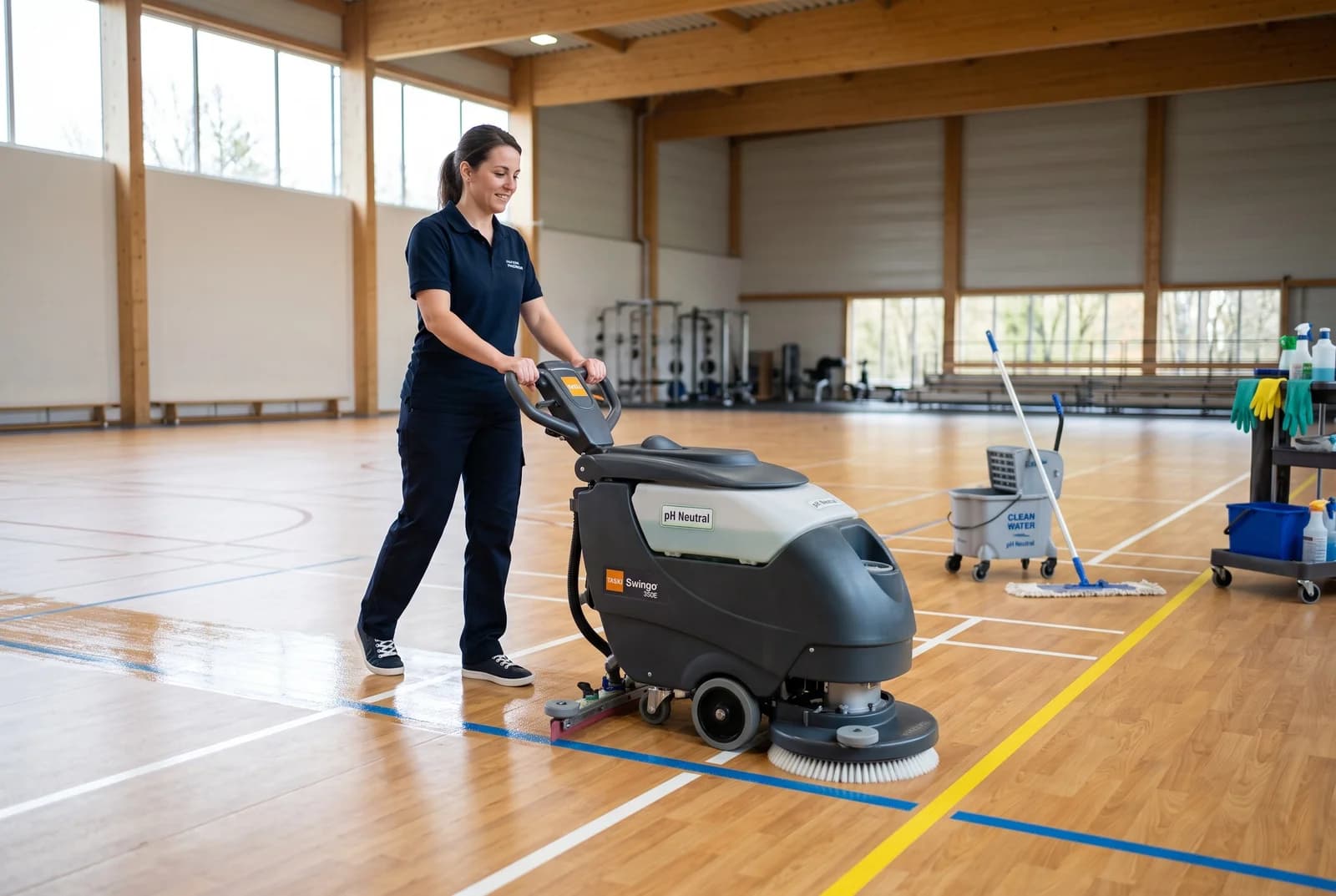
Understand how polyurethane sports floors perform
A polyurethane sports floor is designed to provide a durable, resilient playing surface, but its performance still depends on what happens above the coating. Dust, sweat, grit and cleaning residue can alter the way footwear meets the floor. Your maintenance plan should therefore protect both appearance and playing characteristics, including surface friction and slip resistance.
Why traction depends on a clean surface
Traction comes from consistent contact between the sole and the finished surface. Fine grit can act like an abrasive under moving feet, while a film of sweat, drink residue or detergent may make selected areas feel slick. Clean does not mean glossy: the aim is a dry, residue-free surface with a predictable feel across the court.
Dry dust-mopping removes loose particles before training or competition, and prompt spot cleaning stops small contaminants becoming wider patches. For wider guidance on cleaning, repairs and resurfacing, you can also refer to this sports floor maintenance guide when reviewing your facilities procedure.
How polyurethane coatings respond to moisture and chemicals
Polyurethane coatings tolerate the normal demands of a sports hall, but excess water and unsuitable chemicals can still create problems. Water left on the surface may enter joints or edges, leave a film as it dries, or delay reopening the court. Strong solvents, abrasive powders and unapproved degreasers can dull or soften the finish.
Use the smallest practical amount of diluted neutral pH cleaner, followed by a pass with clean water where the product instructions require it. Ventilation and drying time matter as much as the cleaning action, particularly when the hall must be returned to use quickly.
Signs of wear, residue and coating damage
Look across the floor from a low angle as well as from standing height. A hazy film that follows mop strokes usually points to residue, whereas localised dullness, exposed colour changes, chips or raised edges may indicate wear or coating damage.
Scuffs are often superficial and can respond to an appropriate cleaning method, but repeated scrubbing can make the original problem worse. Photograph unusual marks, note their location and compare them during the next inspection rather than trying increasingly aggressive products.
When maintenance requirements vary by sports facility
A school hall with several sports, assemblies and community bookings will experience a different pattern of contamination from a dedicated training court. Entry arrangements, footwear policies, spectator areas, drinks provision and storage traffic all influence how often you need to dust-mop or spot-clean.
The same principle applies to compliance and performance: a routine should support the floor’s intended use, not simply follow a generic calendar. Where installation, refurbishment and maintenance need to be considered together, sports flooring services can help you frame the wider project around the facility’s sports and operational needs.
Set up the right maintenance equipment
Good equipment makes routine work gentler and more consistent. Before staff begin, make sure mop heads are clean, brushes are soft, buckets are free from old solution and any machine settings suit the manufacturer’s care instructions. Keep a small, clearly labelled kit available so an urgent spill does not lead to improvised cleaning.

Choosing dust-control mops and soft brushes
Choose a dust-control mop that collects rather than pushes grit around, with a clean head for each working session. Microfibre or treated dust-control heads can be useful when they are laundered correctly and not overloaded with debris.
Soft brushes are suitable for edges, corners and textured entrance matting, but stiff bristles and hard pads can mark the coating. Vacuuming should use a floor-safe head, with care taken around lines, joints and thresholds.
Selecting neutral pH cleaning products
A neutral pH cleaner is generally the sensible starting point for routine polyurethane floor care, provided it is approved for the particular surface. Read the product label and the flooring maintenance instructions rather than assuming a household cleaner is suitable.
The cleaner should lift ordinary marks without leaving a noticeable film. If a product needs repeated scrubbing or leaves the floor tacky after drying, stop and reassess the dilution and suitability.
Using clean water and correctly diluted solutions
Fresh water reduces the chance of spreading yesterday’s soil across today’s court. Measure the cleaning concentrate accurately; stronger is not better when it leaves residue or requires extra rinsing.
Work in manageable sections, wring the mop thoroughly and change the water when it becomes visibly dirty. Allow air movement through the hall and keep people off the surface until it is completely dry.
Equipment and chemicals to keep away from the floor
Avoid abrasive pads, wire brushes, steam equipment and chemicals that are not approved for the coating. Heavy scrubbing machines can also remove more finish than intended, especially when used by staff who have not been trained on the equipment.
Do not drag metal furniture, unprotected goals or rolling loads over the court. If equipment must cross the surface, use suitable protection and follow the flooring system’s instructions rather than relying on a makeshift layer.
Follow a daily care routine
Daily care is mostly preventative. A short inspection before the first booking and a final check after the busiest use period can identify grit, spills and access problems while they are still easy to address. Consistency matters more than making one occasional cleaning session unusually intensive.
Removing grit before it causes abrasion
Start with a clean dust-control mop and move in overlapping passes, covering playing areas, run-offs and the routes between doors and storage. Shake out or vacuum the mop head away from the court so collected grit is not redistributed.
Pay particular attention to particles brought in from outside, including mud and road salt during wet or cold weather. If the hall has heavy use, a second dry pass before an evening booking may be more effective than waiting for a visible build-up.
Cleaning spills and marks promptly
Blot liquid rather than spreading it with a wet mop. Once the spill is removed, use a lightly dampened cloth and an approved diluted cleaner if a mark remains, then dry the area before reopening it.
Sports drinks, food, body oils and rubber transfer can all behave differently. Treat the mark according to its source and avoid scrubbing harder simply because the first pass did not remove it.
Checking entrances, walkways and high-use zones
Entrances often explain what you later find on the court. Check walk-off mats, doorways, bench areas, player routes, corners and the space around drinking stations as part of the daily round.
Mats need their own care: vacuum or shake them out regularly and replace them when they stop trapping debris. A clean entrance reduces the work required across the whole floor and helps keep the playing surface more uniform.
Recording issues for the facilities team
A simple log should record the date, area, type of issue, action taken and whether the mark or defect returned. This turns scattered observations into useful information for the person responsible for budgets, bookings and contractor access.
Record repeated residue, recurring dampness or damage near storage as patterns rather than isolated incidents. A short note and photograph can save time when the floor is assessed later.
Use a weekly maintenance schedule
A weekly schedule gives your team a repeatable rhythm without pretending every venue has identical demands. Assign responsibility, allow time for drying and work around lessons, matches, cleaning shifts and public bookings. The following structure can be moved to different days, but the sequence helps prevent inspections from being forgotten.

Monday: inspect the surface and remove loose debris
Begin the week by walking the full floor under good lighting. Look for grit, loose contamination, scuffs, standing moisture, damaged edges and anything that may have been concealed during a busy weekend.
Dust-mop the court and perimeter thoroughly, then check the condition of entrance mats and storage routes. Starting with a clean surface gives you a reliable baseline for the rest of the week.
Midweek: damp-mop and treat visible marks
Choose a quiet period for a controlled damp-mop using clean water and correctly diluted neutral pH cleaner. Keep the mop well wrung and work towards an exit so you do not walk across freshly cleaned sections.
Treat visible marks locally before considering any wider intervention. A clean, dry microfibre pass afterwards helps reveal whether the problem was soil, transfer or a change in the coating itself.
Pre-weekend: check traction and drying conditions
Before the busiest period, check that the playing surface feels consistent and is free from cleaner film. Review ventilation, humidity and drying time, especially if the hall has recently been wet-mopped or the weather has brought moisture through the entrances.
Use a controlled walk-through rather than applying a product to make the floor feel different. If traction seems inconsistent, close off the affected area until you have identified the cause and restored a properly dry surface.
End of week: review damage, residue and cleaning results
At the end of the week, compare the floor with your Monday notes. Look for marks that returned after cleaning, areas that remained damp, and defects that have enlarged or begun to affect use.
A weekly review is also the right moment to check stock, launder mop heads and update the maintenance log. This small administrative step keeps the next week practical instead of reactive.
Maintain traction without harming the finish
Traction is not improved by adding a coating, polish or unapproved treatment to the floor. It is protected by controlling contamination and preserving the finish as specified for the sports surface. When a court feels slippery, investigate first and alter the cleaning method only with a clear reason.
How to identify slippery residues
A slippery patch may be caused by sweat, drink residue, cleaner build-up, dampness or transfer from footwear and equipment. Compare the area with an unaffected section, inspect it under side lighting and check whether the sensation changes once the surface is completely dry.
Do not rely on shine as a test. Some residues look dull, while a floor that appears bright may still have an inconsistent film across high-use zones.
Testing cleaning methods on a discreet area
If you need to try a different approved product or technique, test it first in a discreet area and allow it to dry fully. Check colour, sheen, texture and feel against the surrounding surface before extending the method.
Keep a note of the product, dilution, equipment and drying time used. A controlled test protects you from applying an unsuitable solution across the entire court.
Managing dust, sweat and product transfer
Dust arrives through doors and ventilation, while sweat and body oils concentrate around benches, touchlines and popular routes. Product transfer may come from footwear, tape, cleaning equipment or items brought into the hall.
Increase inspection around those zones rather than automatically intensifying the whole-floor treatment. Your staff can often prevent a wider problem by cleaning a small area promptly and keeping contaminated equipment off the court.
Avoiding over-wetting and detergent build-up
Over-wetting slows reopening and can leave moisture at joints, edges and beneath stored equipment. Excess detergent is equally unhelpful: it attracts soil and may change the way footwear interacts with the finish.
Use a well-wrung mop, measured solution and clean water. If a film remains, do not keep adding cleaner; follow the approved rinsing procedure and seek technical advice if the residue persists.
Adapt maintenance to sports and facility conditions
A useful schedule responds to how your building is actually used. Basketball, assemblies, badminton, exams, community leagues and tournaments can all alter traffic, equipment movement and contamination. Keep the core routine stable, but vary inspection frequency and staffing when the risk changes.
Adjusting the routine for basketball and multi-use courts
Basketball-focused halls may have concentrated traffic around key playing areas, benches and scorer’s tables, while a multi-use court spreads wear across several line layouts and equipment routes. Check that goals, bleachers and temporary equipment are moved without dragging.
Where line markings and different sports share a surface, clean carefully around painted lines and avoid methods that could damage their edges. The appropriate routine is the one that preserves the complete system, not just the most frequently used zone.
Managing heavy footfall and event periods
Tournaments and open days can bring more outdoor grit, spectators, food and rolling equipment into the hall within a short period. Add entrance checks, mid-session spot cleaning and a post-event inspection rather than waiting for the normal weekly slot.
Schedule deeper work during a planned closure where possible. A specialist can help coordinate refurbishment around term dates and operational constraints; for basketball-specific flooring projects, see these basketball court flooring services for context on performance and facility requirements.
Responding to wet weather and contaminated entrances
Rain, mud and road salt can quickly defeat an otherwise good cleaning plan. Inspect mats during the day, keep replacement mats available and deal with tracked contamination before it reaches the playing area.
Separate wet cleaning from court access and provide a clear drying period. If water repeatedly enters through one doorway, address the entrance arrangement as well as cleaning the resulting marks.
Balancing cleaning frequency with court availability
Closing a sports hall has a cost, but rushing a damp floor back into use can create a safety concern and undermine the finish. Build cleaning windows into the booking system, with longer periods reserved for deeper work and shorter response times for spills.
Tell coaches and hirers what footwear, food and drink rules apply. Clear responsibilities reduce avoidable contamination and make the maintenance team’s limited access more effective.
Inspect, repair and document the floor’s condition
Routine cleaning cannot correct every defect. Your records should help distinguish removable contamination from changes in the coating, substrate or joints. Early, accurate escalation is usually less disruptive than waiting until damage affects a larger area or a busy booking period.
Distinguishing surface dirt from coating failure
Surface dirt generally changes after suitable cleaning, while coating failure remains visible when the area is clean and dry. Peeling, cracking, exposed layers, persistent gloss variation and local softness warrant closer assessment.
Compare the affected section with adjacent areas and record its size and position. Do not use harsh chemicals to prove that a mark is permanent; that test can create damage where none existed.
Managing scuffs, scratches and localised damage
Light scuffs may be transfer from footwear or equipment and can often be assessed through gentle spot cleaning. Deep scratches, chips, raised edges and impact marks should be isolated from guesswork and reported with photographs.
Keep heavy items from being dragged over the surface and review how equipment is stored. If damage follows a repeated route, changing the handling method may prevent a small repair from becoming a larger one.
Knowing when professional recoating is required
Professional advice is appropriate when cleaning no longer restores a consistent appearance or feel, when the coating is breaking down, or when repairs are spreading. A specialist assessment can determine whether local repair, recoating, line renewal or broader refurbishment is suitable.
Complete Sports Flooring provides court sanding and refinishing, including recoat and full sand-and-repaint options with updated line markings, according to the documented service scope. Any decision should follow an inspection of the existing floor, its use and the required performance checks rather than a visual guess alone.
Keeping maintenance logs and reviewing performance
Review your log monthly for repeated spill locations, recurring slippery patches, cleaning products used and time lost to drying. These details can reveal whether the main issue is entrance control, staffing, equipment, booking pressure or the floor itself.
Use the evidence when planning budgets and closures. A well-kept record also gives contractors a clearer starting point and helps you explain why a repair or professional inspection is needed.
Conclusion
Maintaining traction: A Weekly Maintenance Schedule for Polyurethane Floors works best when it becomes part of normal facility management rather than an occasional deep clean. Remove grit daily, damp-mop with restraint, inspect high-use areas and record changes so you can act before a minor issue disrupts sport. With the right equipment and realistic cleaning windows, you can protect the finish while keeping the hall ready for the people who depend on it.
—Quick answers
Frequently asked questions
Dust-mop at least daily, and more often during tournaments, wet weather or periods of heavy footfall. The aim is to remove grit before it is worked into the finish by footwear and equipment.
Use a product approved for the specific floor and normally choose a neutral pH cleaner for routine work. Follow the stated dilution and avoid household chemicals unless the flooring guidance explicitly permits them.
Yes, controlled damp-mopping can form part of routine maintenance, but the mop should be well wrung and the floor allowed to dry fully. Avoid pooling water and do not reopen the court while it remains damp.
A cleaner floor may still have sweat, drink residue, detergent film, moisture or product transfer on it. Inspect the affected area, compare it with a clean dry section and investigate the cause rather than applying polish or extra detergent.
Protect the area, blot the spill promptly and use an approved spot-cleaning method if residue remains. Dry the patch completely before allowing players back onto it.
Arrange an assessment when defects persist after suitable cleaning, when the coating peels or cracks, or when traction and appearance remain inconsistent. Repeated local repairs or growing damage are also reasons to seek specialist advice.
The structure is a useful starting point, but you should adjust it for footfall, sports, entrances, events, weather and available closure periods. A busy multi-use hall may need extra daily inspections and additional cleaning around major bookings.