Understanding HSE slippage standards for UK sports surfaces
When you manage a sports hall, gymnasium, court or outdoor facility, you are responsible for taking reasonable steps to protect employees, participants, visitors and contractors. The Health and Safety Executive (HSE) Slippage Standards for UK Sports Surfaces are best understood as part of a wider risk-management framework, not as a single certificate or pass mark. Your approach should connect the condition of the surface with the activities taking place on it. It should also reflect foreseeable changes such as wet footwear, cleaning, spills, crowding and changes in use.
What the Health and Safety Executive requires in practice
The HSE does not prescribe one universal slip-resistance figure for every sports floor. In practice, you are expected to identify hazards, assess who could be harmed and put suitable controls in place. That means looking beyond the flooring material itself to entrances, circulation routes, changing areas, cleaning procedures and the activities taking place in the hall.
A useful assessment considers both normal and unusual conditions. A dry badminton court may behave differently after a busy school fixture, while a sports-hall entrance can become hazardous when rain is brought inside on footwear. The condition of the floor matters as much as its original specification, so inspection and maintenance records form part of a sensible compliance trail.
How the Health and Safety at Work etc. Act applies to sports facilities
The Health and Safety at Work etc. Act 1974 places broad duties on employers and those controlling premises. For a sports facility, that includes providing and maintaining a working environment that is safe so far as reasonably practicable. Flooring is one part of that duty, alongside supervision, housekeeping, equipment, lighting and emergency arrangements.
You should therefore treat a slip risk as an operational issue rather than an isolated flooring fault. If an incident, complaint or near miss reveals a recurring problem, review the controls and decide whether the surface, cleaning regime, layout or supervision needs to change.
The role of the Workplace (Health, Safety and Welfare) Regulations
The Workplace (Health, Safety and Welfare) Regulations 1992 require floors and traffic routes to be suitable, in good condition and free from obstructions where applicable. They are relevant to sports facilities because staff, coaches and visitors use more than the playing surface. Corridors, ramps, door thresholds, reception areas and changing rooms all form part of the journey through the building.
You can support this duty by checking that floor levels are consistent, transitions are visible and damaged areas are dealt with promptly. The practical guidance on workplace flooring regulations is a useful additional reference, but your own assessment should remain specific to the premises and its users.
Why there is no single HSE slip-resistance value for every sports floor
Sports floors have to balance grip with movement. Excessive friction may interfere with turns and increase stress on players’ joints, while insufficient friction can contribute to slips. The appropriate performance depends on the sport, footwear, surface construction, moisture, contamination and whether the floor is indoor or outdoor.
For that reason, a laboratory value should not be treated as a permanent guarantee of safe use. You need to interpret test results alongside the manufacturer’s requirements, the floor’s age and condition, the facility’s cleaning practices and any incident history.
Assessing slip resistance on sports flooring
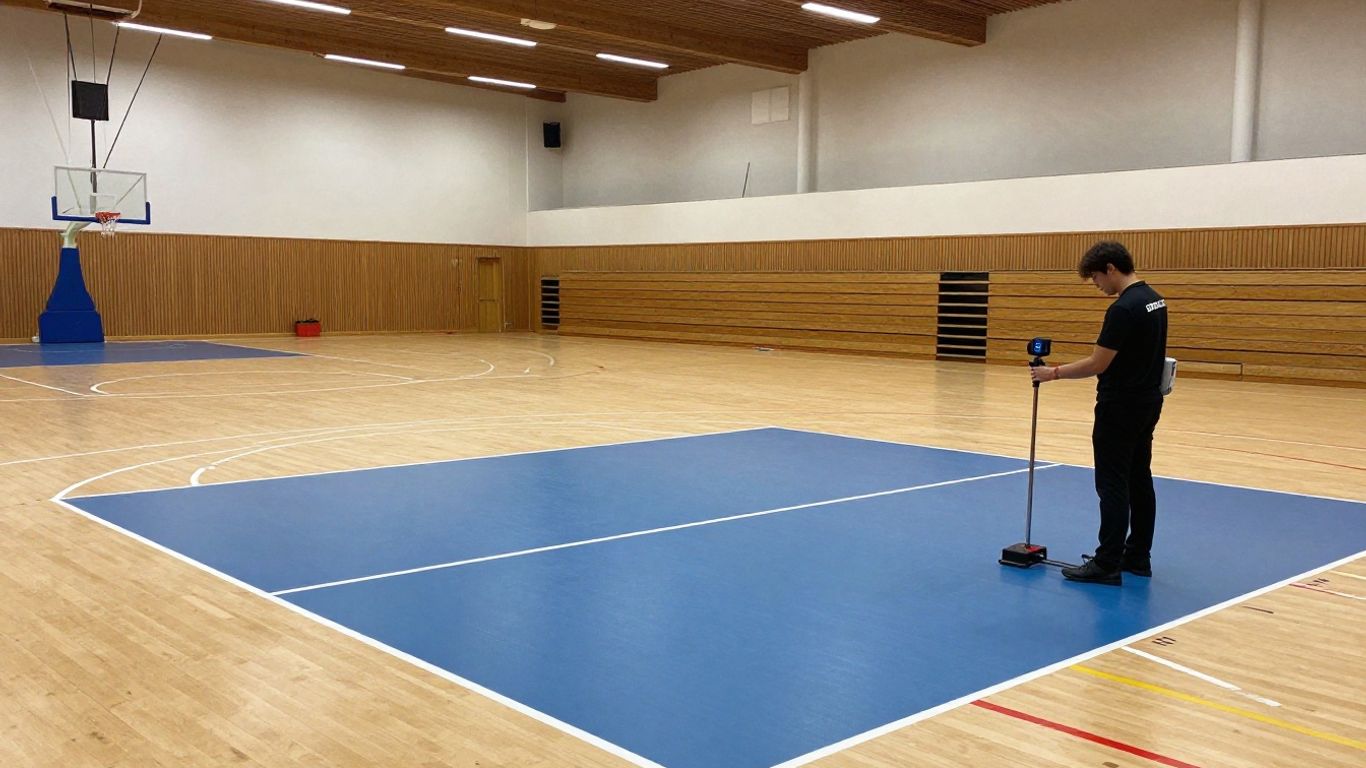
Assessing a sports surface properly means asking how it performs in the conditions your users actually encounter. A test on a clean, dry sample may answer one technical question, but it cannot describe every risk in a busy leisure centre or school hall. You should combine observation, records and suitable testing. That produces a more useful picture than relying on appearance or a generic “non-slip” description.
The difference between slip resistance, traction and skid resistance
Slip resistance describes the interaction between a shoe or other contact material and the floor. Traction is often used more broadly to describe grip during movement, while skid resistance may refer to resistance to sliding under a particular test condition. These terms overlap in everyday conversation, but they are not interchangeable measurements.
When reviewing a report, check exactly what was measured, with which slider or test device, and under what conditions. A clear report should help you understand the result rather than simply attach a pass-or-fail label to the whole facility.
How wet and dry conditions affect sports surfaces
Water can act as a lubricant, alter the contact between footwear and flooring and carry dirt across a larger area. Outdoor surfaces may also hold moisture after rain, while indoor floors can receive water at entrances or from cleaning. A floor that feels secure when dry may need different controls during wet use.
Your assessment should identify where moisture is likely to occur and how quickly it is removed. Mats, drainage, prompt response to spills and temporary closure of affected areas may be more effective than choosing a higher-friction finish that is unsuitable for the sport.
Why footwear, contaminants and cleaning methods matter
The same floor can produce different results with different footwear. Dust, sweat, drinks, body oils, detergent residue and polish can also change the contact surface. If a cleaning product leaves a film, or if unsuitable equipment spreads contamination, routine cleaning may reduce rather than improve performance.
Ask your cleaning team to follow the flooring manufacturer’s instructions and keep a record of products and dilution rates. During an investigation, note what was on the floor, how it had been cleaned and what footwear was in use; these details can explain variation between tests or incidents.
Choosing appropriate test methods for indoor and outdoor facilities
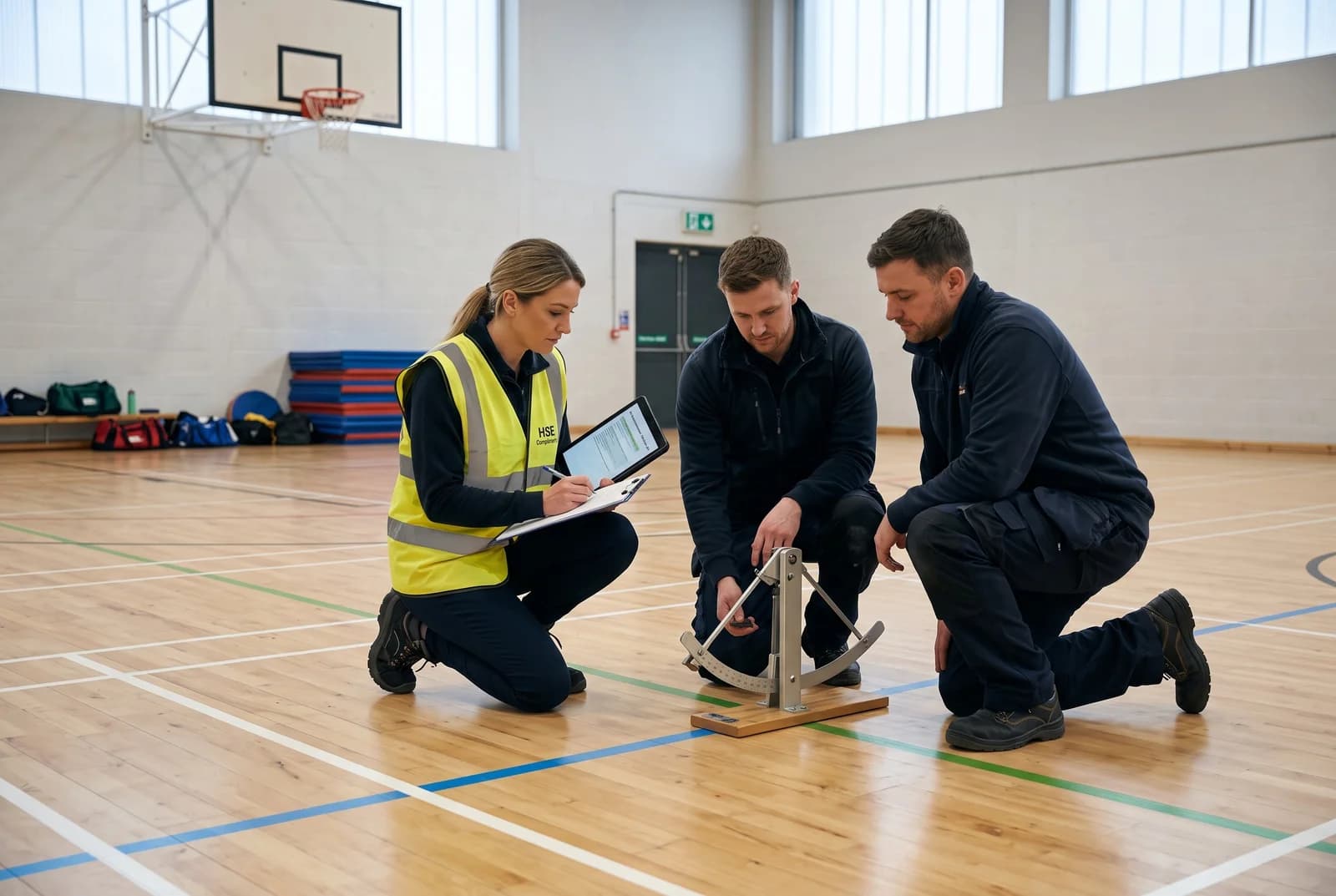
The most suitable test method depends on the question you are trying to answer. A competent assessor may recommend pendulum testing or another method suited to the surface and use, with wet and dry measurements where relevant. For broader background on current approaches, see this guide to slip and skid test standards, then confirm the method with an appropriately qualified provider.
A test should cover representative and higher-risk locations rather than one convenient point. You may need separate checks at entrances, court edges, ramps, transitions and areas where water or cleaning activity is concentrated. The result is meaningful only when it reflects the way the facility operates.
Key standards and guidance for compliant sports floors
Standards give you a common language for specification, testing and quality control. They do not remove the need to assess the finished facility, because installation quality, maintenance and use can affect performance over time. For indoor multi-sports halls, the most relevant starting point is usually the standard for sports surfaces, supported by product information and site-specific safety guidance.
BS EN 14904 for indoor sports surfaces
BS EN 14904 covers indoor surfaces for multi-sports use and addresses performance characteristics such as shock absorption, vertical deformation, ball behaviour and sliding behaviour. It is particularly relevant when you are specifying or procuring an indoor sports floor, although specialist surfaces may fall under different standards.
You should ask for clear evidence of the system being proposed, including the construction, performance classification and installation requirements. The BS EN 14904 indoor sports surfaces guide provides useful context for architects, contractors and facility teams comparing specifications.
BS EN 13036-4 and pendulum testing principles
BS EN 13036-4 is associated with pendulum testing principles for determining skid resistance of surfaces. The method uses a controlled contact and records a result under defined conditions. It is not a substitute for understanding the sport or the environment, but it can provide objective evidence when selected and carried out appropriately.
You should check whether the test method, slider, calibration and environmental conditions are suitable for the floor under review. Results from different methods should not be compared casually, particularly when the devices or test conditions differ.
Relevant guidance for wood, vinyl, rubber and synthetic flooring
Wood, vinyl, rubber and synthetic systems each respond differently to wear, moisture, cleaning and repairs. A timber court may need attention to its finish and line markings, while a resilient sheet floor may be more affected by residue, seams or local damage. Outdoor synthetic systems introduce further questions about drainage, infill, algae and weather exposure.
The useful guidance is therefore the guidance that matches the installed system. Keep the flooring specification, product data, cleaning instructions and repair history together so that future decisions are based on the actual floor rather than a generic material category.
Using manufacturer specifications alongside UK safety requirements
Manufacturer information tells you how a system is intended to be installed, cleaned and maintained. It may also set out performance data and limitations. Those instructions support your legal duties, but they do not transfer responsibility for managing risks at the premises.
Before approving a product or treatment, confirm compatibility with the existing surface and the sports played there. A specialist such as Complete Sports Flooring can assess installation and refurbishment requirements for EN14904-compliant systems, while you retain the responsibility for managing the facility safely in use.
Common sports floor hazards and compliance risks
Many sports-floor problems develop gradually and are first noticed as inconsistent grip, visible wear or repeated complaints. Others appear suddenly when water, cleaning residue or damaged material creates a local hazard. Your inspection process should consider the whole floor and its surrounding routes. It should also allow staff to report problems quickly rather than waiting for a scheduled review.
Sweat, water and cleaning residue in high-use areas
High-use areas near benches, entrances, drinking points and changing rooms can accumulate contamination faster than the centre of a court. Sweat and water may be difficult to see under certain lighting, and cleaning residue can leave a smooth film. These conditions should be treated as foreseeable in the facility’s operating plan.
Use suitable signage and temporary controls while a spill or contaminated area is being dealt with. Check whether the cleaning method removes the contaminant, dries the surface properly and avoids damaging the finish.
Poor transitions, ramps and changes in floor level
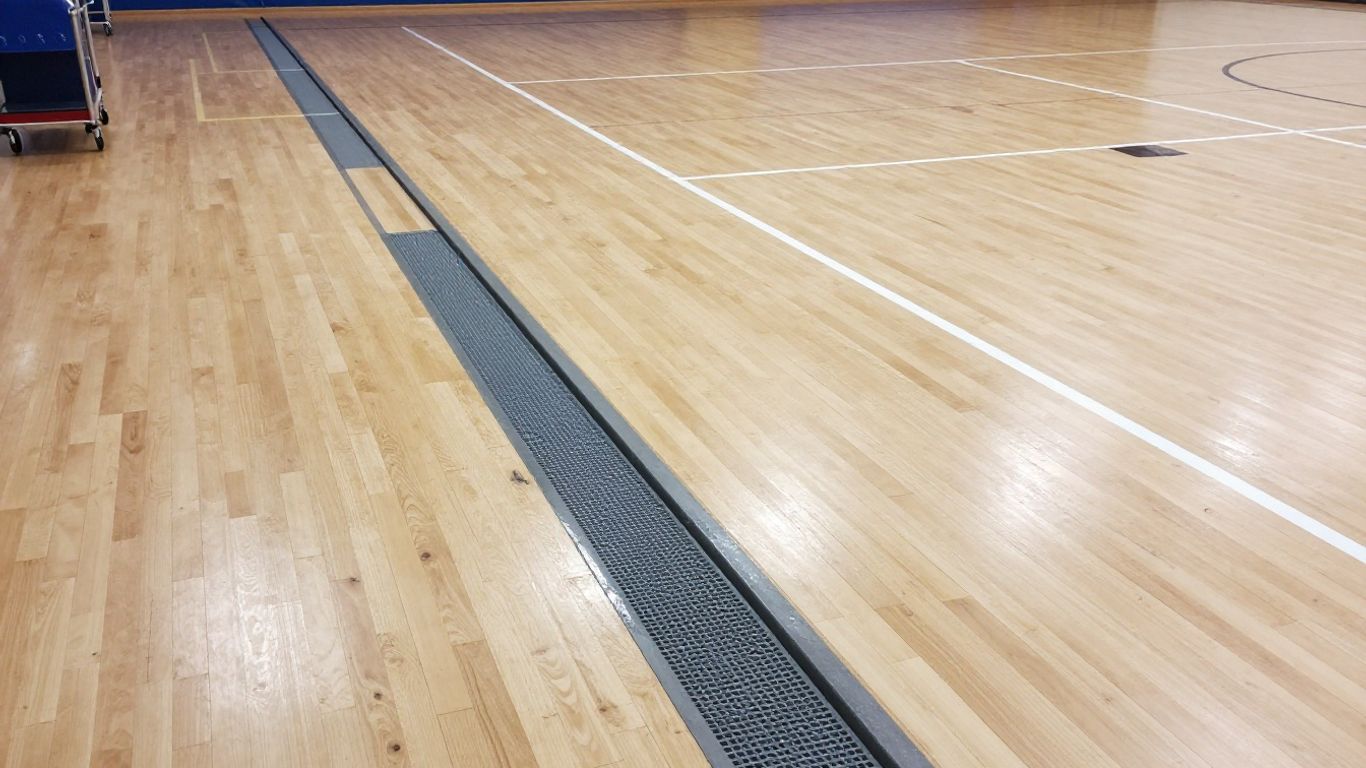
Trips often begin at the edge of a sports surface rather than in the middle of play. Raised thresholds, loose trims, abrupt changes in level and poorly managed ramps can catch footwear or wheels. The risk becomes greater when users are carrying equipment or moving quickly between activities.
Inspect transitions by touch and sight, not only from a standing position. Record defects with a location and priority, then arrange repair or temporary protection according to the level of risk.
Surface wear, damage and loss of texture
Wear can reduce the consistency of a floor even when the overall appearance remains acceptable. Scratches, worn coatings, open joints, loose boards, damaged seams and polished traffic lanes each require a different response. You should not assume that a previous test result remains valid after substantial wear or alteration.
A planned condition survey helps you distinguish cosmetic work from a performance concern. For timber courts, sports floor sanding and refinishing may be considered where the finish or surface condition is suitable for refurbishment, with appropriate retesting after the work.
Inadequate drainage on outdoor courts and pitches
Outdoor sports surfaces need to shed water reliably and remain usable after changing weather. Blocked drains, settlement, low spots, compacted infill and algae can all contribute to slower drying or reduced grip. Water may also migrate into adjacent pedestrian routes, creating a risk beyond the playing area.
Inspect drainage before the wet season and after heavy rainfall. Where a defect is recurring, investigate the underlying gradient, surface construction or maintenance issue instead of repeatedly treating the symptom.
How to test and document sports floor safety
Testing should sit inside a wider management system. A number on a report is only useful when you know why the test was commissioned, where it was taken and what was happening at the time. Good records also make it easier to demonstrate that you responded sensibly to defects, complaints and incidents. They help the next facilities manager understand the floor’s history.
Carrying out a suitable risk assessment
Start by mapping the users, activities and routes through the facility. Consider children, older users, people with disabilities, staff carrying equipment and participants wearing different footwear. Identify where water, contamination, speed, turning or changes in level could make a slip or trip more likely.
Your assessment should state the existing controls, who owns each action and when it will be reviewed. It should also explain why a particular testing method or maintenance response is proportionate to the risk.
Selecting a competent slip-resistance testing provider
Choose a provider that can explain its method, equipment, calibration arrangements and experience with sports flooring. Ask whether testing can be carried out in representative wet and dry conditions and whether the report will distinguish individual locations rather than provide an unexplained average.
Independence is useful where you need an objective assessment after an incident, dispute or major change. The provider should also be willing to discuss limitations, because a responsible report does not pretend that one test answers every safety question.
Recording test conditions, locations and results
Your records should make the test reproducible in principle. At a minimum, record the exact area, floor type, date, weather or moisture condition, cleaning status, footwear or slider details, equipment and result. Note any visible damage, unusual contamination or activity that could affect interpretation.
A simple register can keep the information consistent across rooms and dates. The following structure is practical for comparing results without losing the context around them:
| Record element | What to capture | Why it matters |
|---|---|---|
| Location | Court zone, entrance, ramp or route | Shows whether higher-risk areas were covered |
| Condition | Wet, dry, recently cleaned or contaminated | Explains variation in performance |
| Method | Device, slider, standard and calibration | Makes results meaningful and comparable |
| Finding | Result, defect or observation | Supports a clear action decision |
| Follow-up | Owner, deadline and retest date | Demonstrates ongoing control |
After the table, connect each finding to an action. A low or inconsistent result may lead to cleaning changes, local repair, restricted use or further investigation; the appropriate response depends on the complete risk picture rather than the number alone.
Setting inspection, maintenance and retesting schedules
Set inspection frequencies according to use, traffic and known hazards. A school hall with several daily activities may need checks before sessions, while a lightly used room may follow a different pattern. Retesting is especially sensible after resurfacing, repairs, a significant incident, a change in cleaning products or a change in the sports played.
A schedule should be easy for staff to follow. Include who checks the surface, what they look for, where the record is stored and who authorises reopening after a temporary closure.
Improving and maintaining HSE sports floor compliance
Compliance is maintained through ordinary decisions made consistently: the right cleaning process, prompt repairs, sensible controls during busy periods and timely review. You do not need to wait for an incident before checking whether those arrangements still work. Maintenance also protects the investment in the floor and helps preserve the performance expected by users. For London schools and leisure centres, planning around term dates, closures and bookings can make this work far easier to deliver.
Cleaning regimes that preserve slip resistance
Your cleaning regime should remove contamination without leaving a residue or attacking the finish. Follow the flooring manufacturer’s instructions for products, dilution, machinery and drying time. Keep cleaning equipment in good condition, because dirty pads and brushes can redistribute rather than remove material.
Review the regime if staff report a change in grip after cleaning. A short trial, documented inspection and suitable follow-up testing can help you establish whether the change is linked to the product, process or floor condition.
Repairing, resurfacing or replacing worn areas
Decide between local repair, resurfacing and replacement by considering finish wear, structural damage, movement, subfloor condition and the expected future use. A quick cosmetic treatment may not address a loose board, damaged seam or recurring moisture problem. Conversely, replacement may be unnecessary when the underlying floor remains sound.
Use a specialist installation or refurbishment team that understands the sports and the required system performance. Complete Sports Flooring provides installation, refurbishment, line marking and court refinishing services for hardwood, polyurethane, rubber and vinyl sports surfaces, with maintenance planning also forming part of its documented service offer.
Managing temporary hazards during events and busy periods
Competitions, open days and back-to-back bookings increase traffic and reduce the time available to respond to spills or damage. Plan who will inspect the floor, where warning equipment is kept and how a wet or unsafe area will be isolated. Make sure event staff know that a programme pressure does not override a flooring control.
A short pre-event briefing can cover spill response, equipment movement, footwear expectations and escalation routes. These simple arrangements are particularly valuable when visiting teams or contractors are unfamiliar with the building.
Reviewing compliance after incidents, alterations or changes in use
A review should follow any slip, trip, near miss, significant repair or change in activity. Ask whether the original assessment still reflects the users, footwear, equipment, moisture and traffic patterns. Alterations to entrances, drainage, court layouts or cleaning products can also affect the risk profile.
Keep the review proportionate but specific. Update the risk assessment, record decisions and arrange testing or specialist advice where the available evidence no longer gives you confidence that the floor is performing as intended.
Conclusion
HSE sports floor compliance is an ongoing process: understand the applicable duties, specify an appropriate system, assess real conditions, document your decisions and maintain the surface throughout its life. When you treat testing and maintenance as part of everyday facility management, you create safer, more dependable spaces for sport.
—Quick answers
Frequently asked questions
No. HSE expectations are based on controlling foreseeable risks, and the appropriate performance depends on the surface, sport, footwear, moisture, contamination and use of the facility.
No. It is an important standard for indoor multi-sports surfaces, but you still need a site-specific risk assessment, suitable maintenance and controls for changing conditions.
Where moisture is a foreseeable condition, testing in relevant wet and dry conditions can provide more useful evidence. The method and conditions should be selected by a competent provider.
There is no single interval for every facility. Base the frequency on traffic, activities, known hazards, incidents, cleaning arrangements and the condition of the floor, with routine checks for high-use areas.
It should identify the locations, method, equipment, calibration, environmental and cleaning conditions, results, observations and any recommended actions. Without this context, the figures are difficult to interpret.
Yes. Incorrect products, dilution, application or drying can leave residue or affect the finish. Use the manufacturer’s instructions and investigate any reported change in grip after cleaning.
Retest when the work could affect surface performance, particularly after resurfacing, major repairs, a significant incident or a change in use. Record the work and the post-completion conditions alongside the result.