
What BS EN 14904 covers
The British Standard BS EN 14904: What Facilities Managers Need to Know is not simply a product label to look for on a brochure. It is a performance standard for indoor sports surfaces used for multi-sport activity, giving you measurable criteria against which a floor can be assessed. For a facilities manager, it provides a common language for briefs, tenders, inspections and handover records.
The purpose of the standard for indoor sports facilities
BS EN 14904 sets out requirements for the playing characteristics and safety-related performance of indoor sports surfaces. It helps you compare systems using test results rather than relying only on appearance, material type or general claims about quality. The standard is particularly useful when several sports share one hall and the floor must support different movements, equipment and levels of activity.
You should treat it as one part of a wider management process. The standard can inform design and procurement, but it does not remove the need to consider the building, the intended users, accessibility, fire safety, cleaning arrangements or the rules of the sports taking place.
Sports surfaces and environments within its scope
The standard is concerned with indoor surfaces for multi-sports use. That can include sports halls in schools, colleges, leisure centres and other facilities where users run, jump, turn and play with balls on the same general surface. Timber, synthetic and other surface constructions may be suitable, provided the complete system achieves the required performance when tested by the relevant methods.
Your first question should therefore be how the hall will actually be used. A school sports hall with assemblies and community bookings may have a different operational profile from a dedicated competition venue, even if both require a multi-sport floor.
How it relates to other flooring standards
BS EN 14904 sits within a wider family of standards and guidance. It should not be confused with standards covering a single material, general flooring, fire performance or slip testing. For context on how European sports-surface standards developed and replaced older national approaches, you can read this guide to European sports surface standards.
You may also need to review separate requirements for the building, the intended sport, fire performance and pedestrian slip resistance. Where slip risk is a particular concern, relevant test methods and guidance should be identified separately rather than assumed to be fully covered by BS EN 14904.
The responsibilities of facilities managers
Your role is to make sure the standard is translated into decisions that can be checked. That means defining the intended use, requesting relevant evidence, checking installation conditions and retaining the records needed to demonstrate what was supplied and installed.
You also remain responsible for the floor in daily operation. Cleaning products, unsuitable footwear, heavy equipment, moisture and poor repairs can all affect performance after handover. A compliant installation needs a sensible management regime behind it.
Understanding the performance requirements
The standard covers several characteristics because no single measurement tells you whether a sports floor is appropriate. A surface may feel comfortable but behave poorly under a ball, or provide good grip while becoming difficult to clean and maintain. You need to read the results together and relate them to the activities taking place.
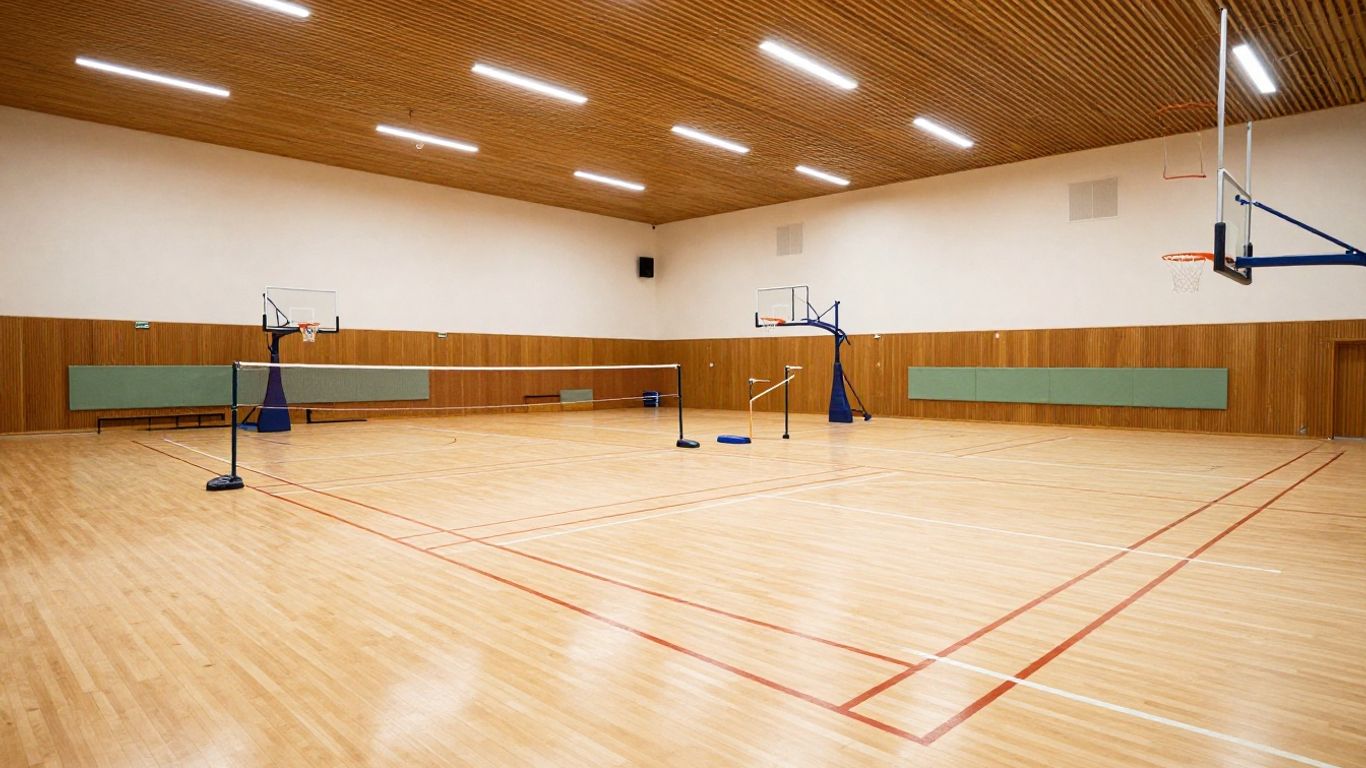
Shock absorption and force reduction
Shock absorption, often described through force reduction, concerns how the surface responds when a user lands or moves across it. Suitable performance can help reduce the harshness of repeated impact, although it does not guarantee that injuries will be prevented. The result must be considered alongside footwear, user behaviour, training load and the wider construction.
When you compare specifications, check the declared test result and the test method. Do not assume that a softer feel automatically means a better floor for every sport. Too much compliance can affect stability, movement and the way equipment behaves.
Vertical deformation and area-elastic behaviour
Vertical deformation describes how much a surface moves under an applied load. Area-elastic systems distribute the response over a wider area, while point-elastic systems respond more locally around the point of loading. Combined systems use both behaviours and need to be assessed as a complete construction.
These characteristics matter because users do not all load a floor in the same way. A landing, a pivot and a wheeled load produce different demands. Your specification should therefore identify the activities and equipment that the floor must accommodate, rather than selecting a classification in isolation.
Ball bounce, friction and resistance to wear
Ball bounce affects the consistency of play, particularly for sports where predictable rebound is part of technique. Surface friction also matters: too little grip can make movement uncertain, while excessive friction may interfere with turns and place additional stress on users. Wear resistance helps the surface retain its playing characteristics under regular traffic.
A useful comparison should include the sports most frequently booked into the hall, not just the sport named in the original project brief. You can also consult this sports hall flooring compliance guide when building a checklist for tender or inspection discussions.
Surface reflectance, flatness and rolling load performance
Visual and physical consistency are equally relevant to day-to-day use. Surface reflectance can affect visibility and glare, while flatness influences movement, ball behaviour and the appearance of line markings. Rolling load performance is important where goals, bleachers, staging or other wheeled equipment cross the playing area.
Before accepting a result, ask what was tested, under which conditions and against which stated requirement. Small differences in site conditions can become noticeable over a large hall, so an attractive finish should never be treated as evidence of compliant performance by itself.
Surface types and classification considerations
Classification helps you understand how a floor is expected to behave, but it is not a substitute for a use-led decision. You need to consider the construction, the sports, the users, the subfloor and the way the hall will be operated. This is where a technically sound specification becomes more valuable than a generic material preference.
Point-elastic, area-elastic and combined systems
Point-elastic floors deform mainly near the point of impact. Area-elastic floors spread the response through the construction, often using a sprung or resilient substructure, while combined systems bring local and wider-area responses together. The appropriate choice depends on the sports and the performance profile required.
Ask suppliers to describe the full build-up, not only the visible wear layer. Adhesives, resilient elements, boards, finishes and the subfloor can all influence how the installed floor performs.
Selecting a surface for different sports
Different sports place different demands on friction, ball response, resilience, wear and rolling loads. Basketball may require particular attention to consistent ball bounce and movement; badminton can make visibility and surface response especially noticeable; community multi-use demands a practical balance across several activities.
For a basketball-led project, basketball court flooring is a useful example of why sport-specific performance, subfloor preparation and line marking need to be considered together. You should still test the proposed system against your own programme of use rather than assume that one sport’s specification covers every booking.
Matching performance to user groups and facility use
A floor used mainly by children, schools, community groups or competitive athletes may need a different balance of resilience, durability and maintenance tolerance. Consider frequency of use, footwear, cleaning capacity, storage, furniture movement and whether the hall is regularly cleared for non-sport activities.
Your brief should explain these realities. A surface that performs well in a controlled sports environment may be less suitable where the same room is also used for examinations, events or assemblies.
Why product data should be reviewed as a complete system
Product sheets are useful, but individual figures can be misleading when removed from their context. Review the declared performance of the surface, resilient layers, subfloor and finish as a single system, and check whether the test specimen matches the proposed installation.
A good technical review will also identify limitations. Ask whether results apply to a particular thickness, support condition, finish or installation method. If those details change, the evidence may no longer describe the floor you are buying.
Specifying a compliant sports floor
A clear brief makes compliance easier to verify and reduces disagreement later. It should describe how the hall will be used, what evidence is required and how the installed result will be accepted. You should also allow enough time for surveys, technical review and coordination with other trades.

Setting requirements in the project brief
Start with the activities, users and operational constraints. State the sports, expected traffic, equipment, storage arrangements, cleaning approach, access restrictions and any term-time or closure windows. Then identify the required BS EN 14904 performance characteristics and the evidence you expect at tender and handover.
Complete Sports Flooring works with educational institutions, leisure centres and commercial sports facilities, where access and scheduling can be as important as the specification itself. If you are planning work in London, a sports flooring installation service can also help you frame the project around surveys, installation and refurbishment requirements.
Checking test methods and declared performance
Ask for current test reports that identify the system tested, the laboratory, the method, the result and any conditions or limitations. Compare like with like; a figure from one construction should not be used to demonstrate the performance of another without clear technical justification.
Keep a schedule of requirements so that tender returns can be checked consistently. If a supplier offers an alternative, record precisely which components, finishes or support conditions differ from the original proposal.
Assessing subfloors, moisture and structural conditions
The subfloor is part of the installation, even when it is hidden. Flatness, strength, moisture, movement, contamination and existing damage can all affect the finished result. A survey should identify whether preparation, repairs, moisture control or structural work is needed before the sports surface is installed.
Do not compress this stage simply to protect a target opening date. If the base is not suitable, defects may appear through the finish and the installed performance may not match the declared data.
Coordinating flooring with line marking and ancillary features
Line marking, sockets, thresholds, access routes, storage and protective coverings should be coordinated before work begins. Marking layouts need to support the sports programme without creating unnecessary visual conflict, and ancillary details should not compromise the surface or restrict maintenance.
The timing matters as well. Agree who approves the final layout, when other trades can enter the hall and how the finished floor will be protected until handover. A neat line-marking plan is only useful if it survives the rest of the project.
Installation and handover requirements
Installation is the point at which a tested system becomes a real floor in a real building. Site conditions, workmanship and sequencing can all influence the outcome. Your handover process should therefore verify more than whether the surface looks complete.
Preparing the subfloor before installation
The installer should confirm that the subfloor is suitable for the proposed system before materials are laid. That includes checking levels, moisture and surface condition, as well as completing agreed repairs and preparation. Any unresolved deviation should be recorded and dealt with before it is covered.
This preparation is also the stage to confirm interfaces with walls, doors, equipment and adjoining floors. Clear records help you distinguish original building conditions from later workmanship issues.
Controlling site conditions during installation
Temperature, humidity, ventilation and moisture can affect adhesives, coatings, timber components and curing times. The installation plan should set out how these conditions will be monitored and what happens if they fall outside the required range.
You should also control access. Other contractors, dust, water and premature loading can damage a newly installed surface or interfere with curing, even when the installation itself was carried out correctly.
Verifying workmanship and installed performance
Inspection should cover joints, transitions, finish consistency, line marking, flatness, visible defects and the operation of relevant doors or equipment. Where the project requires post-installation testing or a retest, make that requirement explicit before work starts.
Complete Sports Flooring describes a refurbishment process that includes a retest for EN 14904 compliance, alongside sanding, plank replacement and finish coats where appropriate. That documented approach illustrates why verification should be planned as part of the project, not added after the floor has reopened.
Collecting certificates, test reports and maintenance instructions
At handover, request the documents you will need to manage the floor: product information, test reports, installation records, warranties, cleaning instructions and details of approved repairs or finishes. Store them where future facilities teams and contractors can find them.
Your maintenance instructions should be practical rather than generic. They should explain suitable cleaning equipment, prohibited products, protective measures, inspection intervals and the process for reporting damage.
Managing an existing sports floor
An older floor may still be serviceable, but age alone does not tell you whether replacement is necessary. Look at performance, condition, usage and the likely cost of intervention. A measured assessment can prevent both premature replacement and false economy.
Recognising signs of performance or safety problems
Watch for excessive movement, uneven response, loose or damaged boards, worn finishes, loss of friction, glare, surface contamination and areas where ball bounce appears inconsistent. Doors, thresholds and transitions can reveal movement or level problems that are easy to miss from the centre of the court.
User feedback is useful, but it should lead to inspection rather than become the diagnosis. Record where and when problems occur, which activities are affected and whether the issue changes with weather, cleaning or loading.
Planning inspections and condition surveys
Set a regular inspection routine and arrange a more detailed condition survey when defects repeat or the floor’s use changes. A survey should combine visual inspection with relevant measurements, moisture checks and a review of previous repairs and maintenance records.
For a London school or leisure centre, plan surveys around access and closure dates. Complete Sports Flooring has provided on-site surveys, moisture testing and itemised quotations as part of refurbishment services, which are useful components to request when comparing proposals.
Repairing, resurfacing or replacing the system
The right intervention depends on the construction and the cause of the problem. Local repairs may address isolated damage, while sanding and refinishing can renew a sound timber surface. Replacement becomes more likely where the subfloor, resilient elements or wider system has deteriorated beyond practical repair.
A refurbishment proposal should explain what will be retained, what will be replaced and how installed performance will be checked. The sports floor refurbishment process describes sanding, plank replacement, finish coats, updated game lines and a compliance retest as elements that may form part of a suitable project, depending on the floor’s condition.
Managing changes in use, equipment and occupancy
A change from school use to intensive community bookings, or the introduction of retractable seating and heavier equipment, can alter the demands on the floor. Review rolling loads, storage, protective coverings, cleaning frequency and booking patterns before approving the change.
If the new use is substantial, obtain fresh technical advice rather than assuming that the original specification remains adequate. Update operating procedures and communicate them to staff, hirers and contractors.
Maintaining compliance throughout the floor’s life
Compliance is not a certificate that makes future management unnecessary. Performance can change through wear, contamination, damage, unsuitable cleaning and alterations to the hall. You protect the value of the installation by treating maintenance and evidence as part of the floor’s life cycle.
Creating a cleaning and maintenance regime
Use the manufacturer’s instructions and the installed system’s requirements to create a written regime. It should cover routine dust and dirt removal, periodic cleaning, spill response, approved chemicals, equipment settings and escalation when the surface begins to change.
Train the people who clean and operate the hall. A simple method applied consistently is usually safer than a complicated schedule that no one follows.
Protecting the surface from damage
Use suitable entrance controls, protective coverings and agreed procedures for moving goals, staging, bleachers and other equipment. Check that castors and wheels are appropriate, and never drag heavy items across the playing surface without proper protection.
Plan deliveries and events so the floor is not exposed to water, grit or unsuitable temporary coverings. These controls are small operational details, but they often determine how quickly a surface wears.
Recording inspections, repairs and incidents
Keep a dated record of inspections, cleaning issues, repairs, incidents and changes in use. Include photographs where helpful, together with the location, suspected cause, action taken and any follow-up testing. This gives you a useful history when budgeting or investigating a recurring problem.
Your records should be easy for another manager to understand. Good documentation reduces uncertainty when contractors quote for repair, resurfacing or replacement.
Reviewing performance during procurement and audits
When you procure cleaning, maintenance or refurbishment, refer back to the original system information and declared performance. Ask bidders to explain how their work will protect the relevant characteristics and what evidence they will provide afterwards.
An audit should consider both the physical floor and the management controls around it. If inspections, records and maintenance instructions are incomplete, address those weaknesses alongside any visible defects.
Conclusion
BS EN 14904 gives you a structured way to specify, assess and manage an indoor multi-sport floor, but successful compliance depends on the complete system and the decisions made throughout its life. By connecting performance evidence with careful surveys, controlled installation, sensible operation and regular records, you can provide a safer and more dependable facility for users.
—Quick answers
Frequently asked questions
BS EN 14904 is a British adoption of a European standard covering performance requirements for indoor surfaces intended for multi-sport use.
No. The standard concerns the performance of indoor sports surfaces, so different construction types may be suitable when the complete installed system meets the relevant requirements.
It is a technical performance standard rather than a complete statement of every legal duty affecting a sports facility. You should also consider applicable building, fire, access, health and safety requirements.
You should review characteristics such as shock absorption, vertical deformation, ball bounce, friction, wear resistance, reflectance, flatness and rolling load performance, as relevant to the proposed use.
The subfloor supports the sports surface and can affect flatness, stability, moisture behaviour and installed performance. It should be surveyed and prepared to suit the proposed system.
Sometimes. The decision depends on the construction, condition, damage, remaining serviceable material and performance requirements. A condition survey should establish whether repair or refurbishment is technically appropriate.
Keep test reports, product information, installation records, warranties, maintenance instructions, inspection notes, repair details and any post-installation verification or retest documentation.