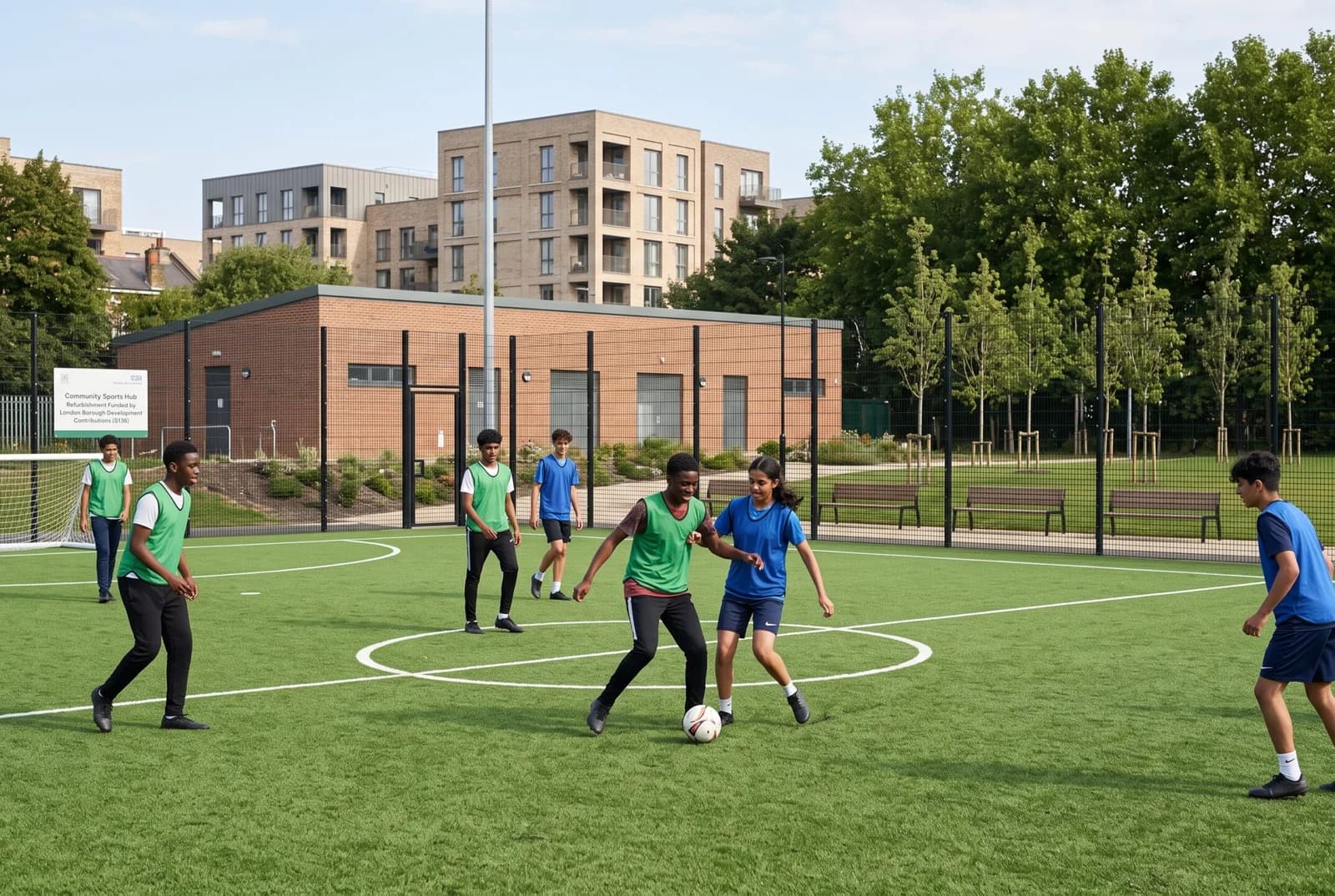
How Section 106 funding supports local sports infrastructure in London
Section 106 funding is one of the ways a London borough can connect development with the infrastructure needed by its growing communities. For a school, leisure centre or community club, that can mean a contribution towards improving an existing facility rather than funding an entirely new building. The route is specific, negotiated and governed by planning law. If you are researching Section 106 Funding: How London Boroughs Support Local Sports Infrastructure, the first distinction to understand is between a planning obligation and a general capital fund.
What Section 106 agreements are and how they differ from the Community Infrastructure Levy
A Section 106 agreement is a legally binding planning obligation made between a local planning authority and a developer, usually under the Town and Country Planning Act 1990. It can require works, land or money where those measures are needed to make a development acceptable in planning terms. A useful guide to Section 106 planning obligations explains the legal basis and the way such agreements can cover community facilities and infrastructure improvements.
The Community Infrastructure Levy, or CIL, works differently. It is generally charged according to a borough’s published levy schedule and the type and size of development, while Section 106 is negotiated around the effects of a particular scheme. In practice, a borough may use both sources, but you should not assume that money collected through one route can be treated as interchangeable with the other.
Why new development can create demand for sports facilities
New homes and other forms of development bring additional residents, workers, pupils and visitors into an area. That growth can increase bookings at a leisure centre, pressure on existing pitches and demand for indoor courts at the very time when facilities may already be heavily used. A planning contribution is intended to address a clear relationship between the development and the infrastructure response.
The effect is not always a dramatic shortage visible on opening day. A modest increase in regular users may instead accelerate wear, reduce available booking time or make an existing changing block unsuitable. You can therefore make a stronger case by describing capacity and quality together, rather than relying only on a headline population figure.
The types of sports infrastructure that funding can support
The eligible project will depend on the wording of the agreement and the borough’s evidence, but sports infrastructure is broader than a new leisure centre. It may include a sports hall refurbishment, playing-pitch improvements, outdoor courts, changing rooms, storage or accessibility works. For facility teams, the condition and performance of the floor can be as important as the room itself.
Complete Sports Flooring works across London on sports hall flooring installation and refurbishment, with systems described as EN14904 compliant for educational institutions and leisure centres. Where a contribution is being considered for a hall, a technically clear scope should explain the surface requirements for the sports played, including relevant considerations such as shock absorption, slip resistance and surface friction.
How funding is linked to a specific development and its local impacts
The link between development and project is the central discipline of Section 106. A borough may identify that a scheme will add demand to a nearby sports hall or open-space network, then set out a contribution, a delivery obligation or both. The closer your project is to that documented local impact, the easier it is to explain why it belongs in the conversation.
You should avoid presenting Section 106 as an unrestricted pot available for any worthwhile sports idea. The agreement may specify a geographic area, facility type, spending purpose or timing condition. Those details determine whether a proposed floor replacement, pitch upgrade or access improvement is a suitable use of the contribution.
The planning rules governing sports funding in London
London boroughs operate within national planning law, the London Plan and their own adopted local policies. These layers shape both the collection of contributions and the projects that can reasonably receive them. You will usually need to read the agreement alongside the relevant local plan, infrastructure evidence and annual reporting. The rules are procedural, but they are also practical: they help distinguish a justified response to development from a loosely connected wish list.

National planning policy and the legal tests for planning obligations
National policy requires a planning obligation to be necessary to make the development acceptable, directly related to the development, and fairly and reasonably related in scale and kind. These tests are often described as the basic legal framework for Section 106. They mean that a council cannot simply attach a sports contribution because sport is generally valuable in the borough.
The obligation must have a defensible planning purpose. If you are preparing a request or responding to a consultation, explain the development’s effect, the facility serving the affected population and the particular works that would mitigate the effect. That evidence keeps the discussion focused and proportionate.
The London Plan’s approach to social infrastructure and active lifestyles
The London Plan treats social infrastructure and healthy, active lifestyles as important parts of sustainable growth. Its approach supports planning for facilities that allow people to take part in sport, recreation and everyday physical activity, while recognising that provision needs to reflect local circumstances. A borough may therefore consider sports halls alongside parks, walking routes and other community assets.
For you as a facilities decision-maker, this wider context can help connect a project to the way people use a place. A sports hall improvement may support regular activity, school use and club bookings, while a safer route to the venue may improve access. The planning argument still needs to remain tied to the development in question.
How borough local plans identify sports and recreation priorities
Local plans translate strategic policy into borough-level priorities. They may identify areas of population growth, pressure on open space, planned leisure provision, deficiencies in pitch quality or the need to protect and improve community facilities. Supplementary planning documents can add detail about how obligations are calculated and negotiated.
You should look for references to sports and recreation in the local plan, infrastructure delivery plan, open-space assessment and relevant facility strategies. Reading those documents together gives you a clearer picture of whether your proposed work fits an adopted priority rather than relying on an informal expectation.
When a Section 106 contribution is considered necessary and proportionate
A contribution is more likely to be supportable when there is a clear chain from development impact to facility response. The council may consider expected population, the existing catchment, available capacity, facility quality and the scale of the proposed works. It will also consider whether another funding mechanism is more appropriate.
A proportionate request is not necessarily the cheapest possible project. It is one that matches the scale and type of impact, can be delivered through the agreement and has a reasonable relationship to the development. Evidence makes the difference when you need to demonstrate that relationship.
What London boroughs can fund through Section 106
The practical use of Section 106 varies between boroughs and agreements, but the principle is consistent: the spending should mitigate the effects of development. That can support capital works at an existing venue, improvements to outdoor recreation or measures that make a facility more usable. You should treat the list below as a framework for investigation, not a promise that every item will be eligible.
New or upgraded leisure centres and sports halls
A contribution may help a borough expand, adapt or refurbish a leisure centre or sports hall serving new development. Possible scopes include improved playing areas, repairs to building fabric, better circulation or works that increase usable capacity. The agreement and supporting planning documents will determine whether a specific venue is within scope.
If flooring is part of the project, the specification should be written around the sports and users who will occupy the hall. Installation sequencing also matters: school terms, public bookings, site access and closure periods can affect both cost and delivery.
Parks, playing pitches, courts and outdoor recreation spaces
Outdoor facilities can experience additional demand just as indoor venues do. Section 106 may be relevant to pitch drainage, surface improvement, fencing, court renewal, equipment or associated park works where the development’s impact and the agreement support that use. A borough may also prioritise improvements across a linked network rather than at the closest site alone.
Your proposal should describe current condition and actual use. A pitch that is technically available but frequently closed, poorly drained or difficult to access may have less effective capacity than a simple inventory suggests.
Changing rooms, lighting, storage and accessibility improvements
Small building elements can have a large effect on whether a sports venue works for clubs, schools and casual users. Changing rooms, lighting, storage, toilets and step-free access may all be considered where they respond to an identified infrastructure need. These items should be presented as part of a coherent facility improvement rather than as disconnected additions.
A clear schedule can help the council understand the practical benefit. Set out the existing constraint, the proposed work, the users affected and the expected change in capacity, safety, inclusion or operating efficiency.
Facilities for grassroots clubs, schools and community organisations
Grassroots organisations often understand local demand particularly well, but Section 106 money is normally controlled by the council and constrained by the planning agreement. A club or school may still help shape a project, provide usage evidence or become a delivery partner. It should not assume that being a valued organisation makes an unrelated purchase eligible.
The strongest community proposals usually show shared use, realistic management arrangements and a route to completion. They also distinguish capital improvement from routine revenue costs, which may fall outside the purpose of the contribution.
Public realm, walking and cycling links that support active travel
Access infrastructure can support sports participation when it connects residents safely and conveniently to facilities. Depending on the agreement, relevant works might include paths, crossings, cycle parking or improvements to the public realm around a venue. The case is strongest where the link is part of the development’s movement impact and contributes to access to sport.
You should explain how the route serves the facility and its users, rather than describing active travel in the abstract. This is particularly useful for venues where poor connections discourage young people, disabled users or families from attending.
How boroughs assess local sports infrastructure needs
A borough has to balance requests from many services and locations, so sports projects are usually assessed against a body of evidence. Population projections matter, but they are only one part of the picture. Existing capacity, quality, access and deliverability can change the priority of a project. If you understand that assessment process, you can make a request that is easier to test and compare.

Using population growth and development impact assessments
Population growth gives a borough an estimate of future demand, while an impact assessment connects that demand to a particular proposal. The assessment may consider dwelling numbers, expected residents, demographics and the facilities likely to serve them. It may also look at cumulative development where several schemes affect the same area.
Your evidence should use the development’s location and scale carefully. A general statement that London is growing will carry less weight than a documented explanation of which venue is expected to serve the additional population and why its current provision is insufficient.
Auditing existing facilities, capacity and quality
Facility audits help councils distinguish a shortage of space from a shortage of usable space. They can record condition, opening hours, booking patterns, surface quality, accessibility, changing provision and the ability to accommodate different sports. Quality and maintenance needs may be especially relevant where an older venue remains heavily booked.
For a sports hall, a useful audit can include the floor system, visible wear, line marking, slip resistance concerns, shock absorption requirements and the operational impact of closure. Complete Sports Flooring can contribute technical knowledge on sports hall flooring installation, refurbishment and maintenance, but the council still needs to decide how that evidence fits its wider assessment.
Consulting residents, clubs, schools and governing bodies
Consultation adds lived experience to formal data. Residents can identify barriers to use, clubs can describe waiting lists and lost bookings, and schools can explain how a facility supports curriculum and community access. Governing bodies or specialist advisers may help clarify sport-specific requirements.
You can make consultation more useful by asking focused questions. Rather than asking whether people want better facilities, test when demand occurs, who is excluded, what capacity is lost and which improvement would make the most immediate difference.
Addressing inequalities in access to sport and physical activity
Boroughs may consider whether facilities are affordable, reachable and suitable for different groups. Unequal access can relate to income, disability, age, gender, transport, opening hours or the quality of the local environment. A project that improves inclusion may have a stronger public benefit, provided its planning connection remains clear.
Avoid treating inequality as a slogan. Describe the barrier, identify the affected users and show how the proposed work would change access. For example, step-free changing provision or a safer route may address a practical obstacle more directly than a broad promise to increase participation.
Setting priorities through infrastructure delivery plans
An Infrastructure Delivery Plan brings together the infrastructure a borough expects to need and the likely means of delivery. It can help you see whether a sports hall, pitch or park project is already recognised as a priority, and whether the short-term capital programme includes a route to delivery. Annual infrastructure funding statements can then show how developer contributions have been received and spent; you can use this Infrastructure Funding Statement resource as an example of the type of publication to seek from a council.
The plan does not automatically allocate money to your organisation. It does, however, provide useful context for timing, competing schemes and the council’s preferred delivery partners. Aligning your proposal with that framework can save time and prevent an otherwise sound project from being sent to the wrong funding route.
How Section 106 sports contributions are agreed and secured
The agreement is usually shaped during the planning process, often before permission is issued. Councillors, officers, developers and landowners must reconcile the development’s effects with the council’s policies, evidence and delivery capacity. Once agreed, the wording matters as much as the headline sum. A sports organisation that wants to benefit from the funding should understand what the legal document actually permits.
Negotiating obligations between councils, developers and landowners
The council identifies the mitigation required, while the developer considers cost, timing and deliverability. Landowners may also be parties to the agreement, particularly where ownership or implementation changes during construction. Negotiation can cover land, works, management arrangements and financial contributions.
You may not take part in the legal negotiation directly, but you can provide a credible project brief to the council officer leading the discussion. Explain the facility need, likely scope, delivery constraints and evidence of local use before the obligation is finalised.
Calculating contributions, triggers and payment schedules
A contribution may be calculated using a local formula, an impact assessment, a costed project or a combination of these. The agreement should state when payment is due, such as before work starts, at a particular construction stage or when a defined number of homes is occupied. Triggers are critical because a contribution that exists on paper may not yet be payable.
The schedule should also identify whether the council receives money in stages and how it may be spent. You can ask for the relevant clause and project reference rather than relying on a rounded figure quoted in a meeting.
Securing funding through the planning agreement
A planning agreement records the obligation, the parties, the trigger, the purpose and any restrictions on use. It may also specify monitoring fees, indexation, notice requirements and what happens if the development changes. Once secured, the contribution is not the same as a grant that a community group can draw down on demand.
That distinction affects your project planning. Do not commit to procurement or announce a start date until the council confirms that the money has been received, released for the proposed purpose and matched with any required capital budget.
Managing viability assessments and changes to development proposals
Development viability can affect the amount and timing of a contribution. If costs, values or scheme details change, the parties may revisit the obligations through the mechanism allowed by planning law and the agreement. A variation can alter what is available for sport, particularly where several infrastructure needs compete for a limited sum.
You should keep your business case current and distinguish essential works from desirable enhancements. A staged project can sometimes remain deliverable when a full scheme no longer fits the agreed funding position, but any change must be approved through the proper council process.
Understanding indexation, pooling rules and repayment clauses
Agreements may index a contribution so that its value keeps pace with specified changes in construction costs or prices. They may also include provisions about pooling, although the legal rules governing pooled obligations need careful attention. Repayment clauses can apply if money is not spent within a stated period or cannot be used for the purpose described.
Read these clauses early. A practical planning obligations resource can help you understand why monitoring and delivery arrangements matter, but the wording of your own agreement remains decisive. Ask the council to confirm the relevant deadline and repayment position in writing.
How to find and apply for Section 106 sports funding
There is no single London-wide application form for every Section 106 sports contribution. Each borough decides how it publishes agreements, identifies projects and engages with potential delivery partners. You may need to approach planning, sport, leisure, parks, education or regeneration teams depending on the facility. A patient search followed by a concise project enquiry is usually more productive than sending a generic funding request.
Where to search for planning agreements and infrastructure statements
Start with the borough’s planning application register and search for the legal agreement attached to relevant developments. Then check the council’s developer contributions page, Infrastructure Funding Statement, Infrastructure Delivery Plan and capital programme. These documents can reveal the agreement reference, purpose, balance, spending deadline and responsible service.
Search by site, ward and facility as well as by the words “Section 106” or “S106”. If the document is not easy to locate, ask the planning authority for the agreement and the latest contribution information connected with the development.
How boroughs publish available funds and project priorities
Some councils publish a list of funded schemes, while others describe priorities in service strategies or annual reports and invite organisations to speak to an officer. The absence of a public application form does not necessarily mean there is no relevant funding; it may mean that the money is already assigned or managed through a capital programme.
When you contact the council, ask three practical questions: whether a sports contribution exists, what purpose it is restricted to and which team controls the project. The answers will tell you whether you are proposing a new scheme, supporting an existing one or seeking a different funding source.
What evidence community sports organisations may need to provide
You may be asked for evidence of demand, current usage, condition, governance, safeguarding, access, costs and ongoing management. Schools and clubs should be clear about ownership and permissions, particularly where works affect a shared or council-managed venue. A request should also explain who will benefit and how the facility will remain available after improvement.
Useful supporting material can include booking data, waiting lists, photographs, condition surveys, quotations, access information and letters from delivery partners. Keep the documents proportionate and label them clearly so an officer can test the proposal without reconstructing it from scattered attachments.
Building a credible business case for a facility improvement
A sound business case turns a general need into a deliverable project. Set out the problem, the proposed scope, the planning connection, the users affected, the estimated cost, the delivery timetable and the arrangements for operation and maintenance. For a sports hall, include the intended sports, compliance requirements and how installation will be managed around term dates or venue closures.
A flooring proposal should not be reduced to a product name. It should explain the performance requirements, substrate or existing-floor condition, line marking, access, protection and handover. Complete Sports Flooring provides free site assessments and itemised quotations according to its published service information, which can help a facility team develop a more specific scope before discussing costs with a council.
Working with councils, schools and delivery partners
Section 106 projects often need cooperation between the council, a school, a leisure operator, a club and technical contractors. Agree who owns the asset, who gives access, who approves the specification and who will maintain the improvement. These questions are particularly important where a hall is used during the school day and by the community in the evening.
You can make delivery easier by nominating one lead contact and preparing a realistic programme. Include surveys, procurement, permissions, installation, commissioning and reopening, with contingency for school holidays, public bookings and restricted site access.
Monitoring, spending and accountability
Collection is only one stage of the Section 106 process. The council must record what it receives, allocate it lawfully and demonstrate how the agreed purpose is being met. For you, accountability is not merely an administrative issue: it affects whether a project can be released, varied or completed before a deadline. Clear records also make it easier for residents and users to see the benefit of development.
How councils track received, allocated and unspent contributions
Councils typically maintain records showing the agreement, amount due, amount received, indexation, allocation, expenditure and remaining balance. Their Infrastructure Funding Statement can provide a yearly view, although the level of project detail varies. You should ask for the agreement reference and current status when following up a sports proposal.
Unspent money does not necessarily mean that a council is ignoring the need. It may be awaiting a trigger, design work, procurement, land approval or a decision about the correct facility. Even so, a long delay should prompt a polite request for the delivery timetable and any risks to the spending deadline.
Reporting requirements for developers and local authorities
The planning agreement may require the developer to notify the council at specified stages or pay monitoring charges. The authority then records receipts and reports relevant information through its published infrastructure reporting. Project managers may also need to provide invoices, completion evidence, photographs or usage information.
If you are a delivery partner, agree the reporting format at the start. A simple record of scope, spend, dates, users and outcomes can prevent uncertainty later, especially where the work forms one part of a larger capital scheme.
Deadlines, clawback provisions and the treatment of unspent funds
Many agreements include a period in which a contribution must be spent on the stated purpose. If that does not happen, the agreement may require repayment or allow the developer to seek repayment, subject to its wording and the circumstances. Funds may also need to be returned if the specified project cannot proceed.
Do not assume an extension is automatic. If design, procurement or land issues are causing delay, raise them with the council early and ask whether a formal variation, reallocation or revised timetable is possible under the agreement.
Measuring participation, capacity and community benefit
A successful project should be assessed against the problem it was intended to address. Measures might include additional bookable hours, reduced closures, improved accessibility, safer use, increased club capacity or participation by groups previously excluded. The appropriate measure depends on the project and should be agreed before completion where possible.
For a refurbished sports hall, record the condition before work, the performance and compliance evidence at handover, the closure period and the pattern of use afterwards. This gives the council a practical account of benefit without claiming that one project alone caused every change in participation.
Common reasons sports funding is delayed or redirected
Projects can stall because a payment trigger has not been reached, costs have risen, land ownership is unclear, the proposed use falls outside the agreement or the council has prioritised a more urgent scheme. A contribution can also be redirected when the original project is no longer deliverable, but that should be supported by the relevant legal and planning process.
You can reduce avoidable delay by checking eligibility before commissioning detailed design, keeping costs updated and confirming the decision-maker. If the money is already committed elsewhere, ask for the reason and whether another sports infrastructure route is more suitable.
Conclusion
Section 106 can turn the pressure created by London development into targeted investment in sports infrastructure, but only when the planning link, legal wording and delivery case are clear. If you are responsible for a hall, pitch or leisure facility, start with evidence of need, read the relevant agreement and build a practical scope around users, compliance, access and long-term maintenance. That approach gives your borough a clearer basis for deciding whether the proposed improvement is necessary, proportionate and deliverable.
—Quick answers
Frequently asked questions
It is money, works or other planning obligations secured from a development to mitigate its identified effects, which may include pressure on local sports and recreation facilities.
It may do so where the agreement permits the use, the floor responds to a documented local infrastructure need and the project is properly connected to the development’s impact.
No. Section 106 is negotiated around a specific development, while CIL is generally charged under a published borough levy framework. A council may use both mechanisms for infrastructure.
The local planning authority normally controls the contribution and must spend it according to the planning agreement and relevant legal requirements.
Contact the relevant borough planning, leisure, parks or regeneration team with evidence of demand, facility condition, proposed works, costs, users and the connection to a nearby development.
The agreement may contain a deadline, repayment or clawback provision. You should check the precise wording and raise delivery risks with the council well before the deadline.
Usually, the contribution is directed towards the specific infrastructure purpose stated in the agreement. Routine revenue costs may need to be met through a different funding route unless the agreement expressly provides otherwise.